Building a new product comes with risk. You can spend months or years developing something only to find out nobody wants it. MVP development solves this problem.
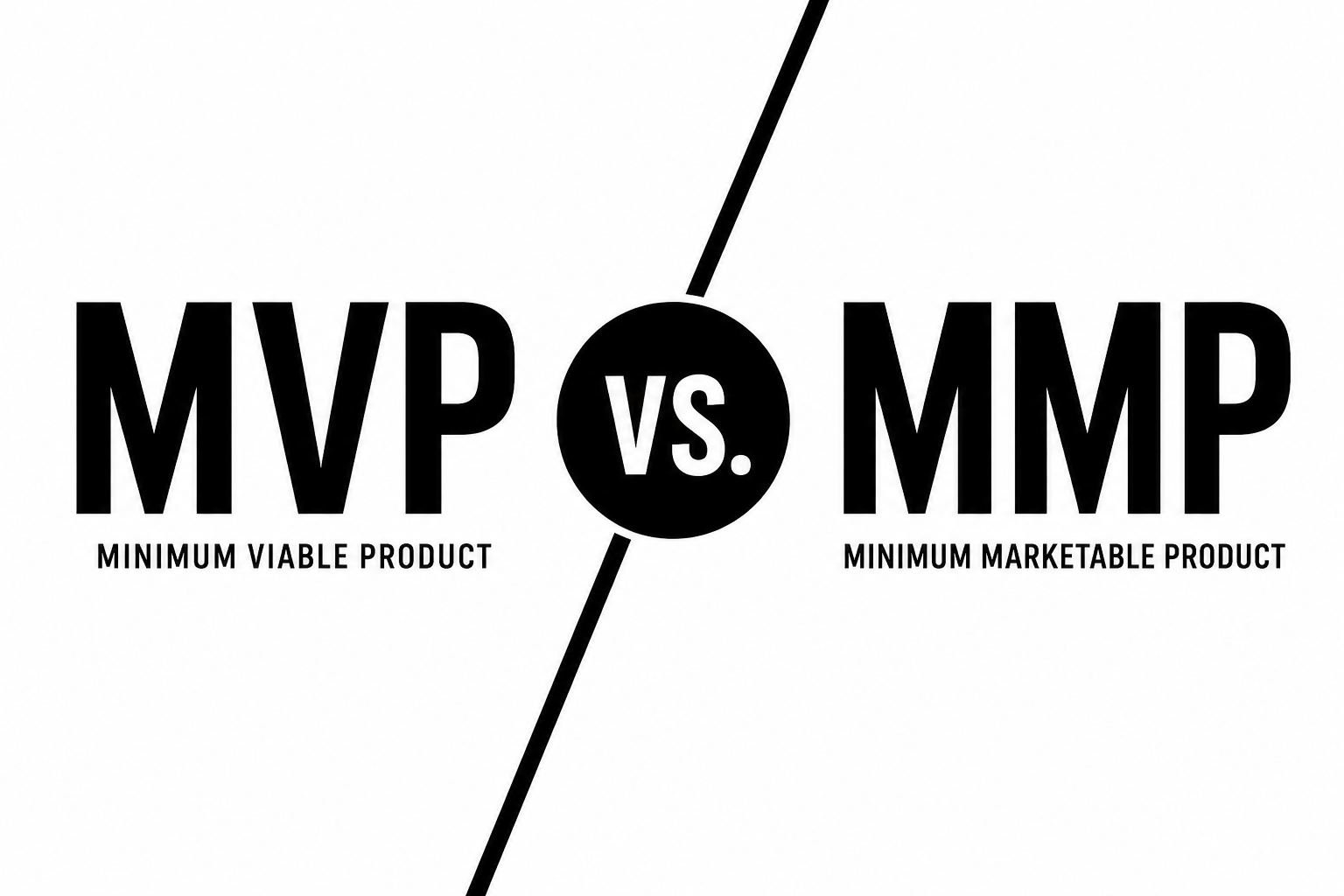
MVP stands for Minimum Viable Product. It is a basic version of your product with just enough features to attract early users and validate your idea. The goal is not to build a perfect product but to learn quickly and spend less money.
Startups use MVPs to test assumptions before going all in.
Enterprises use MVPs to test new ideas without disrupting their core business.
This guide covers everything you need to know about MVP development.
You will learn what an MVP is, why it matters, when to build one, how to do it, and what it costs.
What Is MVP Development?
MVP development is the process of building a Minimum Viable Product. An MVP is the simplest version of your product that still delivers value to users. It has the core features needed to solve a specific problem and nothing more.
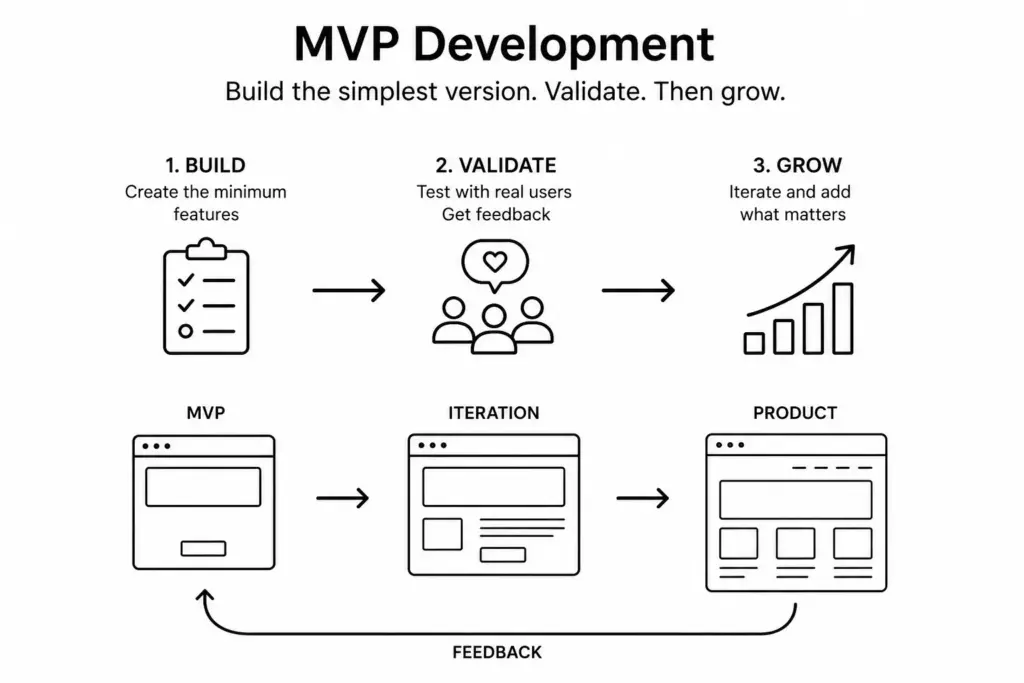
The term was first used by Frank Robinson. He defined an MVP as a product that maximizes return on risk for both the vendor and the customer. In plain terms, it means building just enough to test your idea and get feedback.
Why Businesses Build MVPs?
Businesses build MVPs for one main reason: to learn. They want to know if their product idea solves a real problem for real people. An MVP gives them that answer without spending a fortune.
Other reasons include:
- Testing market demand before full development
- Getting user feedback early in the process
- Attracting investors with a working product
- Reducing the risk of building something nobody wants
- Launching faster than competitors
Common Misconceptions About MVPs
Many people misunderstand what an MVP really is. Here are some common myths:
Myth 1: An MVP is a cheap, low-quality product.
An MVP is not about cutting corners; it’s about focusing on what matters. The product should work well and provide a good user experience for the core features.
Myth 2: An MVP is the final product.
An MVP is just the starting point. You learn from it and then improve. The goal is to iterate based on real user data.
Myth 3: Anyone can build an MVP quickly.
While MVPs are smaller in scope, they still require planning, research, and quality execution. A poorly built MVP can produce bad data and lead you in the wrong direction.
MVP vs. Prototype vs. Proof of Concept vs. Beta Product
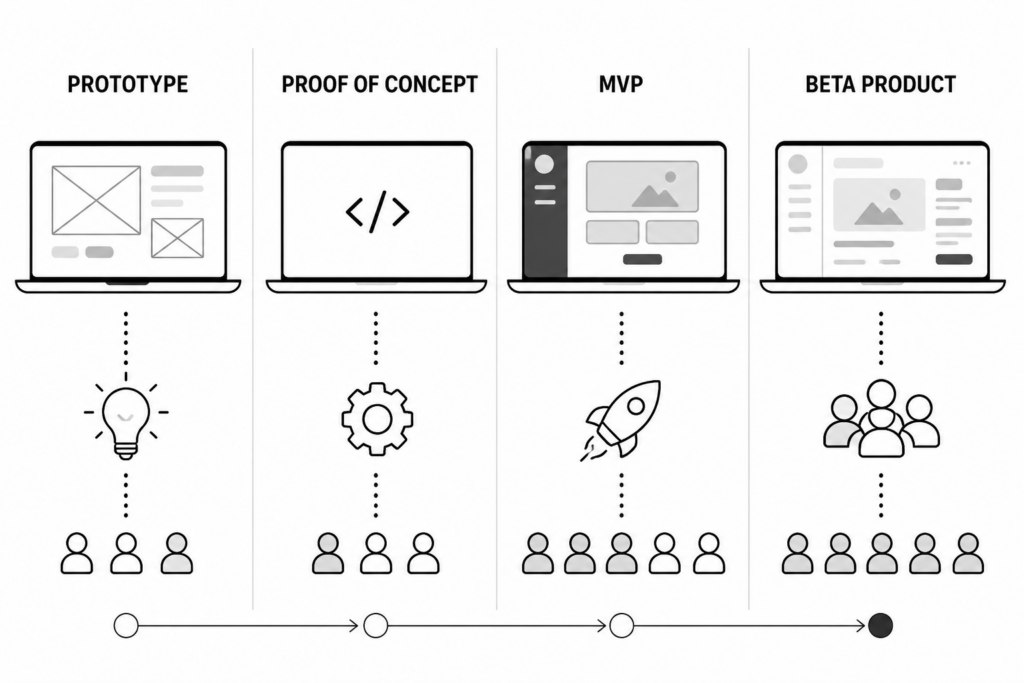
These terms get mixed up often. They are different tools for different jobs.
Proof of Concept (PoC): A PoC tests if an idea is technically possible. It answers the question, “Can we build this?” A PoC is usually internal and not customer-facing.
Prototype: A prototype shows how the product will look and work. It tests design and user experience. Prototypes can be simple sketches or interactive mockups. They are not functional products.
MVP: An MVP is a functional product that real users can try. It tests market viability. The question it answers is, “Will people actually use this?”
Beta Product: A beta version of the product is more complete. It has more features than an MVP. Beta testing happens after the MVP phase and focuses on finding bugs and polishing the experience.
Why MVP Development Matters?
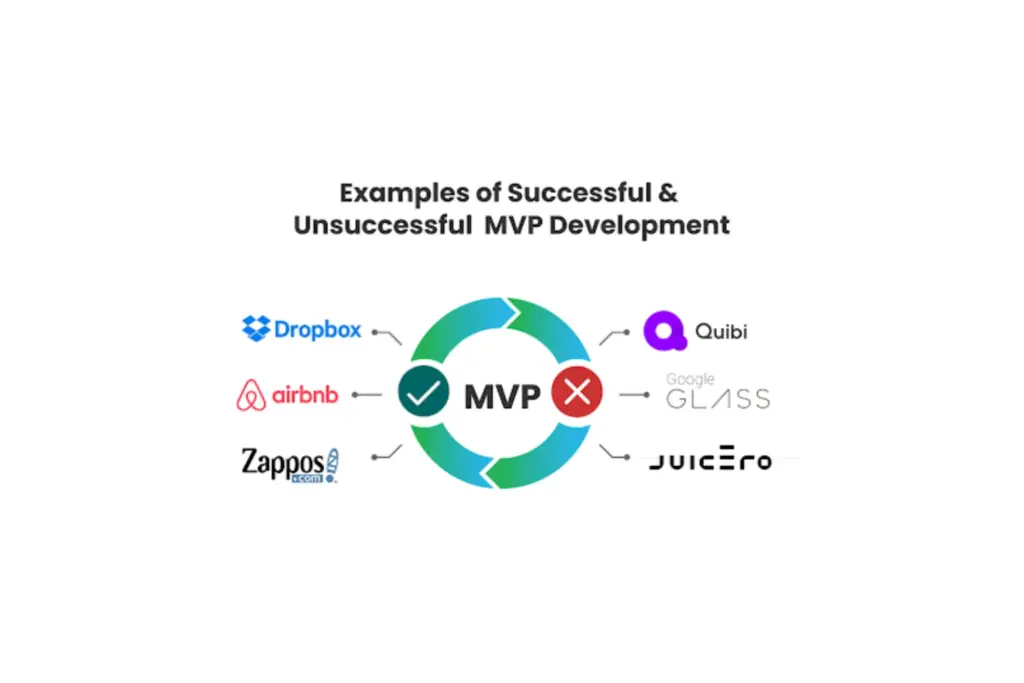
Validate Market Demand
The biggest reason to build an MVP is to test if people actually want your product. You can have the best idea, but if nobody buys it, it does not matter. An MVP puts your product in front of real users. Their behavior tells you if you are on the right track.
Reduce Development Costs
Full product development costs a lot of money. You pay for design, development, testing, and infrastructure. Building an MVP costs less. You only build what you need to test your core assumption. If the idea fails, you lose less money.
Faster Time to Market
Speed matters in business. The faster you launch, the faster you learn. An MVP can be built in weeks or months rather than years. This gives you a head start on competitors and lets you capture early adopters.
Lower Product Risk
Every product has risk. You might build the wrong features, target the wrong audience, or solve a problem that does not exist. An MVP reduces these risks by testing your assumptions early. You make small bets instead of one big bet.
Gather Real User Feedback
Feedback from friends and family is not reliable. Real user feedback comes from people who actually use your product. An MVP gives you that feedback. You learn what users like, what they do not like, and what they really need.
When Should You Build an MVP?
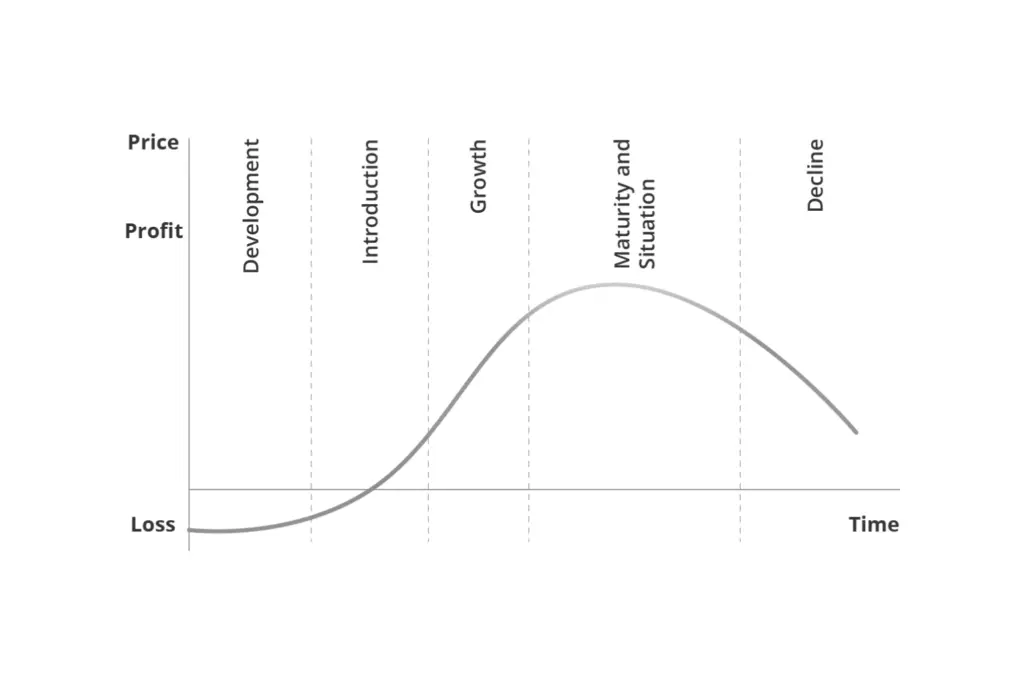
1. Startup Ideas
Startups are the classic use case for MVPs. You have limited funding and a big idea. An MVP helps you test the idea without running out of money. You can show traction to investors and get more funding.
SaaS Products
Software-as-a-Service products benefit greatly from MVPs. You can build a basic version with core features and start charging customers. As you get feedback, you add more features. This approach works well for B2B and B2C SaaS.
Mobile Apps
Mobile app development is expensive. Building for both iOS and Android can double the cost. An MVP lets you test your app idea on one platform first. You can validate the concept before investing in the other platform.
Enterprise Software
Enterprise software is complex and expensive. An Enterprise MVP helps you test new tools or features with a small group of users first. You can gather feedback and make improvements before rolling out to the whole organization.
AI Products
AI products have unique challenges. Many AI projects fail to move beyond the proof-of-concept stage. An MVP helps you test if your AI solution actually solves a real problem. You can validate the value before investing in more data and training.
Internal Business Tools
Not every product is for customers. Internal tools can also benefit from MVP development. You can build a basic tool for a small team, test it, and improve it based on their feedback. This approach saves time and money compared to building a full system from the start.
The MVP Development Process
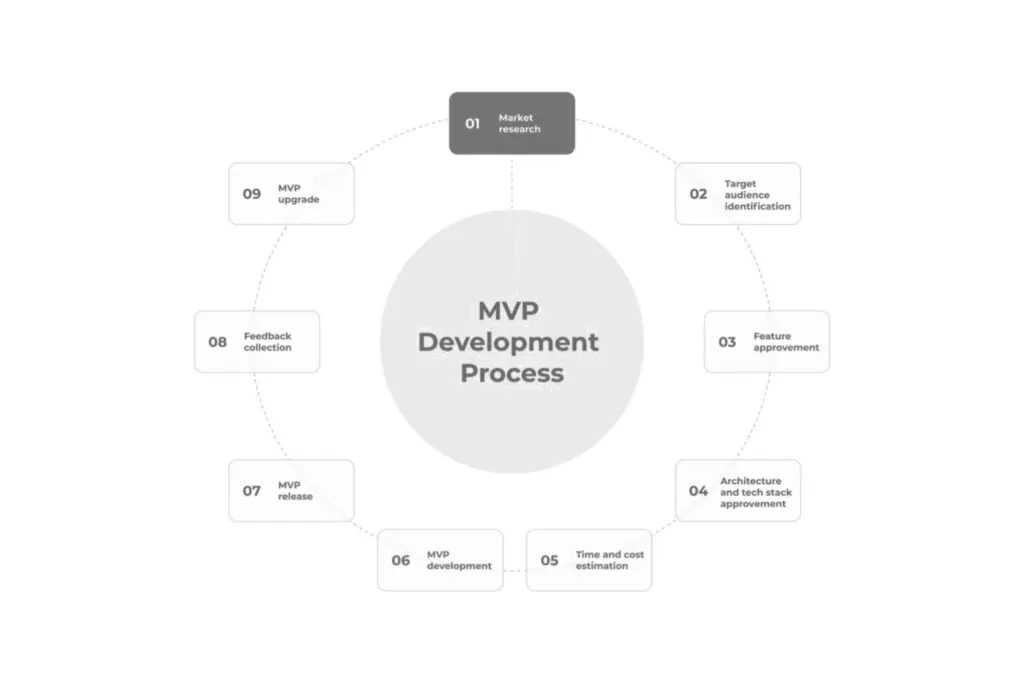
This section gives a high-level overview. For a deeper dive, check out the complete guide.
Idea Validation
Start by validating your idea. Talk to potential users. Ask them about their problems. Find out if your solution actually helps them. This step saves you from building something nobody wants.
Market Research
Research your market. Who are your competitors? What do they offer? What gaps exist? Understanding the market helps you position your product and find your unique angle.
Define Core Features
List every feature you think your product needs. Then cut that list in half. Then cut it again. Keep only the features that solve the core problem. Everything else can wait.
UX/UI Design
Design the user experience and interface. Keep it simple. Users should understand your product quickly. Good design helps you get better feedback because users can actually use the product.
MVP Development
Build the product. Use the tech stack that makes sense for your project. Focus on speed and quality for the core features. Do not worry about perfect code or scaling. You can fix those later.
Testing
Test your MVP before launch. Find bugs and fix them. Make sure the core features work properly. A broken MVP gives you bad data because users cannot use it.
Product Launch
Launch your MVP to early adopters. This could be a small group of beta testers or a public launch. The key is getting it in front of real users.
User Feedback
Collect feedback from users. Watch how they use the product. Ask them questions. Look at analytics. This feedback tells you what to improve.
Product Iteration
Use the feedback to improve your product. Add features users actually want. Remove features they do not use. Keep iterating until you achieve product-market fit.
Different Types of MVPs
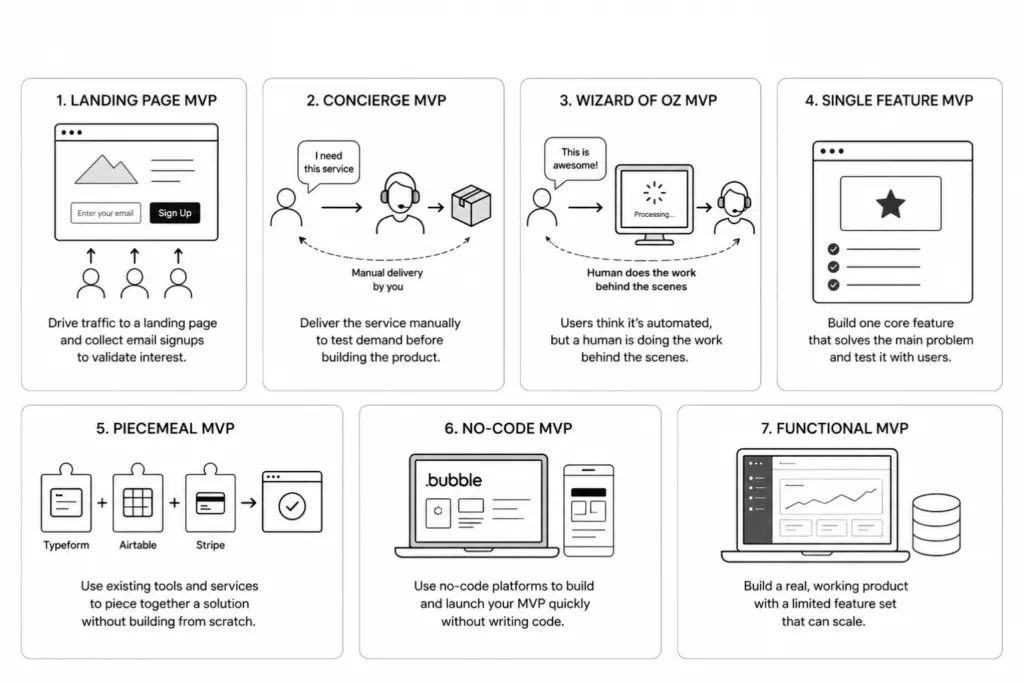
There are many ways to build an MVP. The right approach depends on your product, your market, and your goals.
Landing Page MVP
A landing page MVP is a simple webpage that describes your product and collects email addresses. You run ads to drive traffic. If people sign up, you know there is interest. This is one of the fastest and cheapest types of MVP.
Concierge MVP
With a concierge MVP, you deliver the service manually rather than building software. For example, instead of building a food delivery app, you take orders by phone and deliver food yourself. This tests if people want the service before you build the technology.
Wizard of Oz MVP
The Wizard of Oz MVP looks like a real product but works manually behind the scenes. Users think they are interacting with software, but a human is actually doing the work. This tests the user experience without building complex technology.
Single Feature MVP
A single-feature MVP focuses on a single core function. You build only the most important feature and nothing else. This keeps development fast and focuses your testing on what matters most.
Piecemeal MVP
A piecemeal MVP uses existing tools and services to create your product. Instead of building from scratch, you combine off-the-shelf solutions. This saves time and money while still delivering value to users.
No-Code MVP
No-code tools let you build applications without writing code. Platforms like Bubble, Webflow, and Glide make it possible to launch an MVP in as little as a few weeks. This is a great option for non-technical founders.
Functional MVP
A functional MVP is a fully working product with a limited feature set. It is built with real code and can scale. This type takes more time and money but gives you a stronger foundation for growth.
How to Prioritize Features for an MVP?
Feature prioritization is one of the hardest parts of MVP development. You have many ideas, but you can only build a few.
Must-Have Features
Must-have features are essential. Without them, your product does not work. These are the features that solve the core problem. Everything else is optional.
Nice-to-Have Features
Nice-to-have features add value but are not essential. They make the product better but are not required for the initial launch. Save these for later versions.
User Pain Points
Focus on features that address user pain points. What problem are you solving? Which features directly address that problem? These are your priorities.
Feature Prioritization Frameworks
Several frameworks help you prioritize features:
MoSCoW Method: This stands for Must Have, Should Have, Could Have, and Won’t Have. It helps you separate essential features from nice-to-haves.
Kano Model: This model categorizes features based on their impact on customer satisfaction. Basic features are expected. Performance features increase satisfaction. Excitement features delight users.
2×2 Prioritization Matrix: This framework plots features based on impact and effort. High-impact, low-effort features go first. Low-impact, high-effort features go last.
MVP Development Timeline
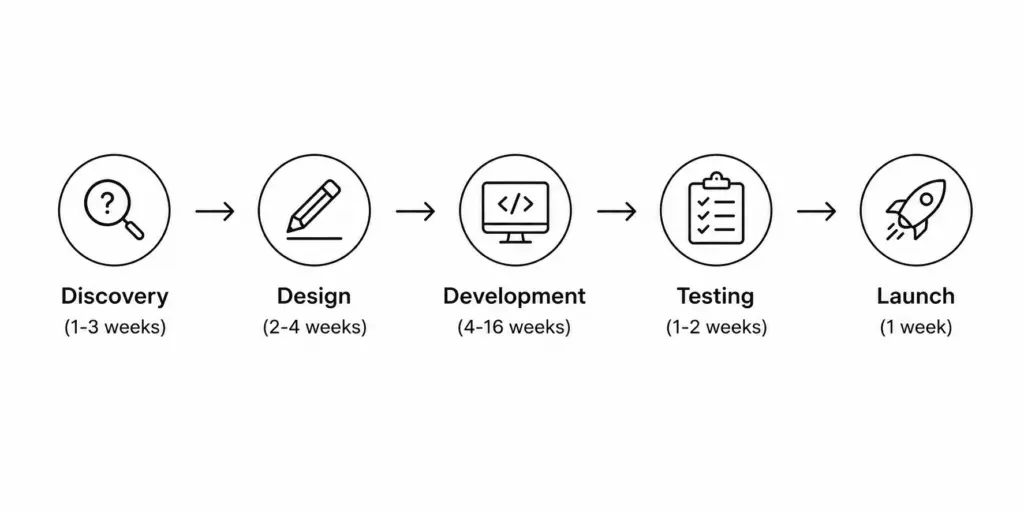
The timeline for MVP development varies based on scope, complexity, and team size. Most MVPs take 1 to 6 months to build. Simple no-code MVPs can launch in 4 to 8 weeks.
1. Discovery Phase
Duration: 1 to 3 weeks
This phase covers idea validation, market research, and feature definition. You figure out what to build and why.
2. Design Phase
Duration: 2 to 4 weeks
This phase covers UX/UI design. You create wireframes, mockups, and prototypes. You test designs with users before development starts.
3. Development Phase
Duration: 4 to 16 weeks
This is where the actual building happens. Developers write code, build features, and integrate services. The timeline depends on complexity and team size.
4. Testing Phase
Duration: 1 to 2 weeks
Testing finds bugs and ensures quality. You test on different devices and browsers. You fix issues before launch.
5. Launch Phase
Duration: 1 week
Launch day. You release your MVP to early users. You monitor performance and collect feedback.
MVP Development Cost
MVP costs vary widely. A small MVP can start around $10,000. More detailed MVPs can go beyond $50,000. Advanced MVPs can reach $150,000 or more.
What Affects MVP Cost?
Several factors influence the cost of your MVP:
Team Size
Larger teams cost more but work faster. A typical team includes a project manager, developers, a QA engineer, and a designer. Freelancers and agencies have different rate structures.
Platform Choice
Web apps are usually cheaper than mobile apps. Mobile apps can cost $60,000 to $150,000 for both iOS and Android. Cross-platform tools like React Native or Flutter can reduce costs.
Complexity
Simple MVPs with basic features cost less. Complex MVPs with AI, integrations, or custom algorithms cost more. SaaS MVPs typically range from $30,000 to $100,000.
Third-party Integrations
Integrating with other services adds cost. Payment processors, mapping services, and AI APIs all require development time. Some services also charge usage fees.
Choosing the Right Tech Stack
The tech stack you choose affects speed, cost, and scalability. Here is a brief overview.
Web Applications
For web apps, popular choices include Next.js with TypeScript for the frontend and Node.js or Python for the backend. These technologies offer good developer velocity and strong ecosystems.
Mobile Apps
For mobile, you have two options. Native development uses Swift for iOS and Kotlin for Android. Cross-platform development uses React Native or Flutter. Cross-platform saves money but may have performance tradeoffs.
SaaS Products
SaaS products often use the same stack as web applications. The backend needs to handle multiple users and subscriptions. PostgreSQL or Supabase are common database choices.
AI Applications
AI applications need specialized tools. Python is the dominant language for AI. Frameworks like TensorFlow and PyTorch are common. Cloud providers offer AI services that speed up development.
Cloud Infrastructure
Cloud platforms host your application. AWS, Vercel, and Google Cloud are popular options. Choose based on your needs for scaling, cost, and ease of use.
Internal link: Best MVP Tech Stack
Common MVP Development Mistakes
Building Too Many Features
This is the most common mistake. Founders want to impress users with a full-featured product. But more features mean more cost and longer timelines. It also makes it harder to learn what users actually want.
Skipping Customer Validation
Some founders build first and ask questions later. This is risky. You might spend months building something nobody wants. Validate your idea before you write a single line of code.
Ignoring Analytics
You cannot improve what you do not measure. Analytics tell you how users behave. Which features do they use? Where do they drop off? Use this data to guide your decisions.
Poor UX
Users judge your product by how it looks and feels. Poor design makes users leave. Even an MVP should provide a good experience for the core features.
Delayed Launch
Perfectionism kills MVPs. Your MVP does not need to be perfect. It needs to be good enough to test your hypothesis. Launch as soon as you have a working product.
Lack of Product Iteration
Launching is not the end. It is the beginning. You need to collect feedback, analyze data, and make improvements. Products that do not iterate fail.
MVP Development Best Practices
Keep Scope Small
Build only what you need to test your core assumption. Everything else is waste. A smaller scope means faster launch and lower cost.
Focus on One Core Problem
Your MVP should solve one problem really well. Do not try to solve multiple problems at once. Focus gives you clarity and makes your product easier to understand.
Launch Quickly
Speed is your advantage. Launch as soon as you have a working MVP. Early feedback is more valuable than a perfect product.
Measure User Behavior
Track how users interact with your product. Use analytics tools. Watch session recordings. This data tells you what works and what does not.
Iterate Based on Data
Use your data to make decisions. Add features users actually want. Remove features they do not use. Let the data guide your roadmap.
Industries That Benefit from MVP Development
MVP development works for almost any industry. Here are some examples.
SaaS: Software companies use MVPs to test new tools and features before full development.
FinTech: Financial technology companies use MVPs to test new payment systems, lending platforms, and investment tools with limited risk.
HealthTech: Healthcare companies use MVPs to test patient portals, telemedicine platforms, and health tracking apps.
EdTech: Education technology companies use MVPs to test learning platforms, tutoring apps, and course management systems.
Logistics: Logistics companies use MVPs to test tracking systems, route optimization, and delivery management tools.
eCommerce: Online retailers use MVPs to test new store concepts, checkout flows, and recommendation engines.
AI Products: AI companies use MVPs to test if their models actually solve real problems.
Marketplaces: Marketplace platforms use MVPs to test the match between buyers and sellers before scaling.
Build In-House vs. Hire an MVP Development Company
You have three main options for building your MVP. Each has pros and cons.
In-House Team
Building in-house means hiring developers, designers, and product managers as full-time employees.
Pros: Full control, deep commitment, long-term team building.
Cons: High cost, slow hiring, management overhead.
Freelancers
Freelancers are independent contractors who work on a project basis for your MVP developemtn.
Pros: Lower cost than agencies, flexible hiring, access to specialized skills.
Cons: Less reliability, harder to manage, quality varies.
Dedicated Development Partner
An MVP development partner is an agency that provides a full team for your project.
Pros: Complete team, proven process, faster timeline, lower risk.
Cons: Higher cost than freelancers, less control than in-house.
| Cost | High | Low to Medium | Medium to High |
| Speed | Slow | Medium | Fast |
| Control | Full | Limited | Medium |
| Quality | Variable | Variable | High |
| Risk | High | High | Low |
Frequently Asked Questions
What is MVP development?
MVP development is the process of building a Minimum Viable Product. This is a basic version of a product with just enough features to attract early users and validate the product idea.
How long does MVP development take?
Most MVPs take 1 to 6 months to build. Simple MVPs using no-code tools can launch in 4 to 8 weeks. Complex MVPs with advanced features can take longer.
How much does MVP development cost?
Costs range from $10,000 for a simple MVP to $150,000 or more for advanced products. SaaS MVPs typically cost $30,000 to $100,000. Mobile apps can cost $60,000 to $150,000 for both platforms.
What features should an MVP include?
An MVP should include only the features that solve the core problem. Everything else can wait. Focus on must-have features and save nice-to-have features for later.
Can I build an MVP without coding?
Yes. No-code tools like Bubble, Webflow, and Glide let you build functional MVPs without writing code. Landing page MVPs and concierge MVPs also require no coding.
What happens after launching an MVP?
After launch, you collect user feedback and analyze data. You use this information to improve the product. This cycle of feedback and iteration continues until you achieve product-market fit.
What industries use MVP development?
Almost every industry uses MVP development. Common examples include SaaS, FinTech, HealthTech, EdTech, logistics, eCommerce, AI products, and marketplaces.
How do I validate an MVP?
You validate an MVP by putting it in front of real users. Watch how they use it. Ask for feedback. Track analytics. If users adopt the product and find value, you have validation. If they do not, you need to pivot or iterate.
Conclusion
MVP development is a proven approach to building products that people actually want. You start small, test your assumptions, and learn from real users. This saves time and money compared to building a full product from the start.
The journey has several steps: validate your idea, research the market, define core features, design the experience, build the product, test it, launch it, and iterate based on feedback. Each step builds on the last.
The key is to keep your scope small and focus on one core problem. Launch quickly and let data guide your decisions. Do not let perfectionism delay your launch. An imperfect product with real users is better than a perfect product with no users.
Every successful product started as an MVP. Your product can too. Start validating your idea today.
Ready to bring your idea to life? Talk to an MVP development expert.