Many founders hit a wall after their first product ships.
The MVP is live, a few users are testing it, and now the team is stuck arguing about what to build next. Some want to add more features. Others say the product needs a full design pass before it’s ready for real customers.
And some aren’t sure if they even solved the right problem yet.
Most of that confusion comes from not knowing the difference between an MVP and an MMP.
These two stages have different goals, different audiences, and different definitions of success. Mixing them up leads to either launching too early with something that damages your brand, or staying in “testing mode” so long that the market moves on without you.
This article breaks down exactly what each stage is, how they differ across key factors, and how to know which one your product needs right now.
Quick Definitions First.
What Is an MVP?
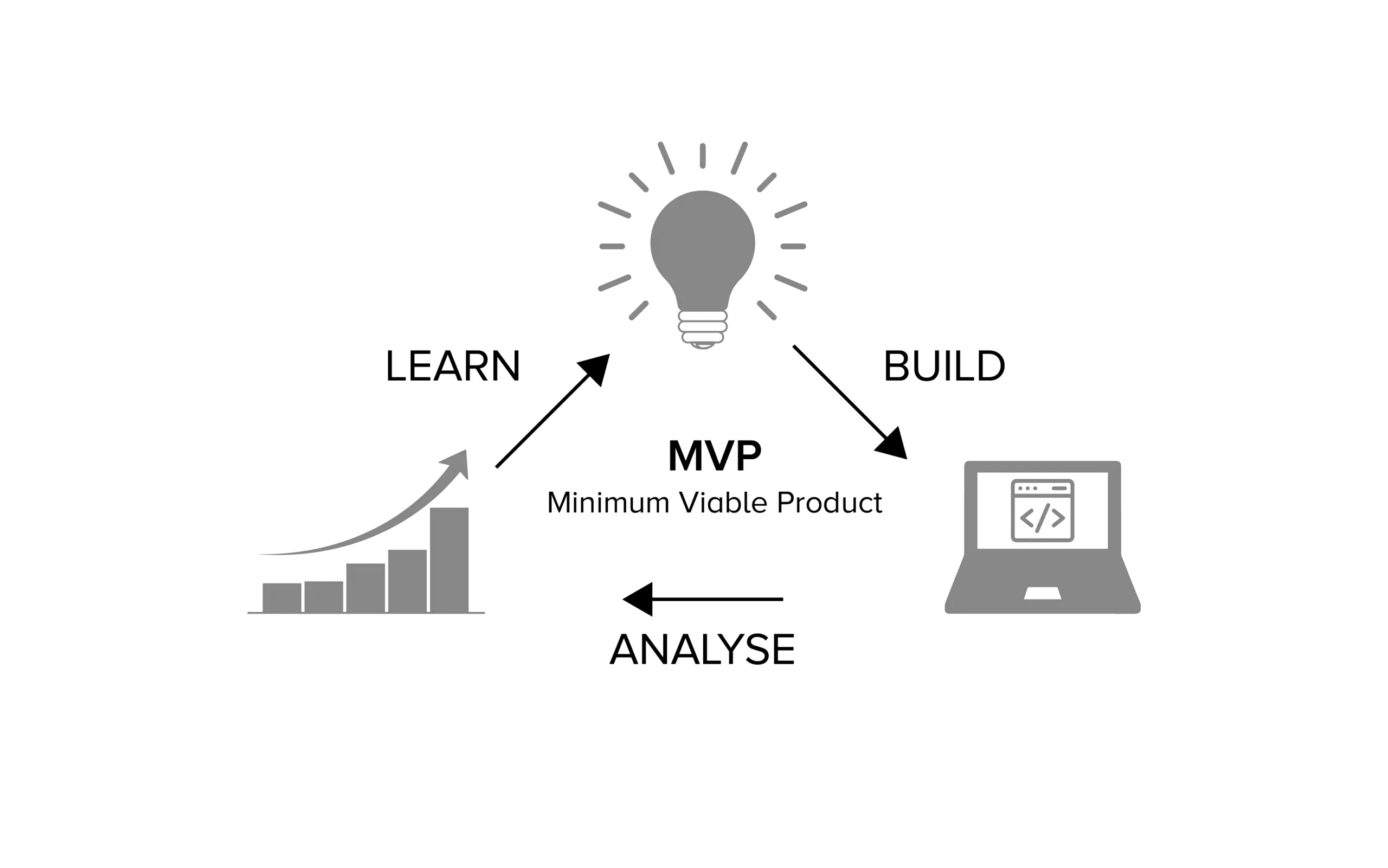
An MVP, or minimum viable product, is the smallest version of your product that lets you test a core assumption with real users. The goal is not to impress anyone. The goal is to learn.
Speed matters more than polish at this stage. An MVP can have a rough interface, manual backend processes, and placeholder design as long as the core function works and users can interact with it. Understanding an MVP in software development clarifies what should and shouldn’t be in your first build.
What Is an MMP?
An MMP, or minimum marketable product, is the earliest version of your product that is ready for a real market launch. It has enough features and quality that users would actually pay for it, leave a positive review, or recommend it to others.
The goal shifts from learning to acquiring customers. An MMP still isn’t a full product, but it meets the bar a real buyer expects before they hand over money.
The Core Difference in One Line
An MVP answers the question: does this idea work? An MMP answers the question: can this product sell?
How They Differ Across Key Dimensions
1. Purpose
The purpose of an MVP is to test a specific assumption as fast as possible. You’re not trying to build something people love yet. You’re trying to determine whether the core problem is real and whether your approach to solving it makes sense.
The purpose of an MMP is different. By the time you’re building an MMP, the core assumptions have already been tested. Now the job is to build something good enough that the market actually adopts it.
The mistake most founders make is treating both stages as the same goal. They launch an MVP expecting customer growth and then wonder why users aren’t converting. Or they spend months polishing an MMP-level product before confirming anyone wants it.
2. Audience
An MVP goes to early adopters, beta testers, and people willing to put up with rough edges in exchange for early access or a direct line to the team. These users don’t expect a finished product. They expect involvement.
An MMP goes to real buyers. These are people who won’t tolerate a bad onboarding experience, a confusing interface, or an app that crashes. They’re judging your product against every other tool in the category, not against the rough prototype you showed your first beta testers.
Shipping an MVP to a general audience before it’s ready is a common way early-stage startups damage their reputation with the users they’re trying to attract.
3. Feature Set
An MVP strips the product down to one core function that proves or disproves the main hypothesis. One user type. One problem. One solution path. Everything else gets cut.
If your hypothesis is that busy restaurant owners will pay for automated inventory tracking, your MVP only needs to track inventory. Payroll integration, staff scheduling, and table management features are all in progress.
An MMP adds back the features that MVP testing revealed users need before they commit to paying. Not everything on the roadmap, just the specific blockers that kept users from converting during the MVP stage.
That distinction matters. Adding features because they seem useful differs from adding features because real users said they couldn’t pay without them.
4. Quality Standard
MVP quality only needs to be good enough to test the core loop. The design can be basic. Some processes that look automated on the frontend can be handled manually behind the scenes. Error messages can be rough. Load times can be slower than ideal.
None of that matters at the MVP stage as long as users can complete the core action you’re testing.
MMP quality has to hold up to real-world use. The app needs to be stable. Onboarding has to be clear enough that a new user can get started without needing to call your team. Design needs to be clean enough that it doesn’t cast doubt on the company’s legitimacy. Press coverage, investor attention, and word of mouth all depend on a product that feels finished enough to be taken seriously.
5. Success Metric
You measure an MVP by validated learning. Did users engage with the core feature? Did they come back? Did their behavior confirm or challenge your main assumption?
Revenue and growth are not the right metrics for an MVP. Expecting signup spikes or paying customers from a product built purely for testing sets the wrong expectations for the whole team.
You measure an MMP by business metrics. Conversion rate. Paying customers. Retention after the first week. Early revenue. These are the numbers that tell you whether the product is ready to scale, not just ready to learn from. Check out real MVP success stories from eight startups to see how teams tracked the right metrics at each stage.
6. Timeline and Cost
MVPs move fast. Most take between six and twelve weeks to build and cost somewhere between $10,000 and $50,000 depending on complexity. The goal is to get something real in front of users as quickly as possible without overbuilding. The full breakdown of what drives MVP development costs covers the specific factors that push that number up or down.
MMPs take longer and cost more because the quality bar is higher and the feature set has grown based on actual user feedback. A rough MVP development timeline typically covers discovery, design, development, and testing, and all of those phases get more involved when you’re building for a paying audience rather than a testing group.
The Typical Path From MVP to MMP
For most founders, MVP and MMP aren’t competing choices. One comes before the other in a natural sequence.
Stage 1 — Idea and Hypothesis
Before building anything, the team maps their riskiest assumptions. Not the assumptions they feel confident about, but the ones that, if proven wrong, would make the whole business model fall apart.
That riskiest assumption becomes the target of the MVP. Everything in the build is designed to test that one thing, not to build a product people love yet.
Stage 2 — Build the MVP
A good MVP covers one user type, one core problem, and one solution path. No extra roles, no integrations that aren’t strictly required to test the hypothesis, and no features the team wants, but users haven’t asked for.
How to develop an MVP covers the step-by-step process for scoping and building this first version without overcomplicating it. The most common mistake at this stage is letting scope creep in under the label of “minimum.”
Stage 3 — Test and Learn
Once the MVP is live, the team collects feedback through user interviews, usage data, and retention tracking. The point isn’t to get compliments. The point is to determine whether real users behave as the hypothesis predicts.
A user who says “this is great” but doesn’t come back after day one is not validating your idea. A user who returns three times in the first week and asks when a specific feature is coming is giving you something much more useful.
Stage 4 — Decide to Pivot or Progress
After a real feedback cycle, the team makes one of three calls. The data supports the hypothesis and the team moves toward MMP. The data partially supports it, and certain features or the target audience need adjusting. Or the data clearly show that the hypothesis was wrong and a larger directional shift is needed.
A clean decision checklist for this stage:
- Did users complete the core action the MVP was built around?
- Did at least some users return without being prompted?
- Did any users express willingness to pay, even informally?
- Does the feedback point to a clear set of features users need before paying?
If you can answer yes to all four, moving to MMP makes sense. If not, more MVP testing or a pivot is the better call.
Stage 5 — Build the MMP
The MMP adds back what the MVP intentionally left out, but only the pieces real users said they needed before they’d pay. Typical additions between MVP and MMP include:
- A proper onboarding flow instead of a manual walkthrough from your team
- Payment integration that actually works for real transactions
- Better error handling so users don’t hit dead ends
- Performance improvements for speed and stability under real usage conditions
- Design polish that raises the product to a professional standard
- The specific features users said were blocking them from committing.
A QA strategy for MVP development helps teams catch the stability and reliability issues that are fine to skip in an MVP but will hurt an MMP launch if left unaddressed.
When to Skip the MVP and Go Straight to MMP?
Most early-stage founders benefit from starting with an MVP. But there are specific situations where skipping that stage and going straight to MMP is the smarter call.
You already have strong validation from prior work. If you ran a manual or service-based version of this product for paying clients, you’ve already done the validation work. The data exists. Building an MVP to confirm what you already know from direct customer work is a waste of time and money.
You’re entering a high-trust regulated market. Healthcare and fintech are the clearest examples. In these spaces, a rough MVP shown to real patients or real financial users doesn’t just fail to impress. It actively damages trust and can create compliance risk. Healthcare and fintech MVP development both require a higher baseline of quality and security from the very first version, because the audience expects it and regulations require it.
You’re productizing an existing service with known demand. An MVP development agency that’s been doing the work manually that the software will automate already knows the customer, the workflow, and the price point. Moving to an MMP directly makes sense because the market fit question has already been answered through years of doing it by hand.
When to Stay at MVP Longer Than You Think?
The pressure to “launch properly” often pushes many founders toward MMP before they’re ready. A few signals that staying in MVP mode longer is the right call:
The core assumption remains unconfirmed. If you can’t point to clear behavioral data showing users engage with and return to the core feature, the hypothesis hasn’t been proven yet. Polishing the product doesn’t fix a validation gap.
Retention is weak even if signups look good. A high signup rate with low week-two retention is a sign the product isn’t delivering on what users expected. Moving to MMP in this state means spending more money building on top of a problem that hasn’t been solved.
The team is adding features instead of talking to users. This is one of the clearest warning signs. Adding features feels productive. But at the MVP stage, talking to users about why they did or didn’t do a specific thing inside the product tells you more than any new feature ever will. If the team’s answer to weak engagement is “we need to add X,” the real answer is probably “we need to understand why users aren’t finishing Y.”
Common Mistakes Founders Make Between MVP and MMP
Treating the MVP launch as a public product announcement. An MVP is a test, not a product launch. Sending it to a press list or pushing it across social channels before the core loop is validated sets expectations your product can’t meet yet.
Jumping to MMP before the MVP data is clear. Two weeks of user testing with five people is not enough to confirm a hypothesis. Rushing to MMP because the team is excited about the idea, rather than because the data supports it, leads to building a polished product on unproven assumptions.
Overbuilding the MMP. Moving from MVP to MMP doesn’t mean adding everything on the roadmap. It means adding the specific reasons users said were blocking them from paying. Every extra feature added at this stage increases cost, delays launch, and introduces more complexity to test and maintain.
Confusing user compliments with validated demand. People are polite. A user saying “this is really cool” in an interview does not mean they’d pay for it. Willingness to pay, repeat usage, and referrals are the signals that matter. Compliments are not.
Skipping onboarding design. Onboarding is the single biggest conversion lever between MVP and MMP. Users who can’t figure out how to get value from the product in the first five minutes leave and don’t come back. This is one of the most commonly skipped pieces when teams are rushing to add features.
Not updating pricing strategy. Many teams run their MVP with a free or heavily discounted beta offer. When moving to MMP, pricing needs to reflect real market positioning. Transitioning from a free beta to a paid product requires a clear communication plan, so early users understand the change and its value.
MVP vs MMP: Side-by-Side Comparison
| Goal | Test a core assumption | Acquire paying customers |
| Audience | Early adopters and beta testers | Real buyers and market users |
| Feature set | One core feature only | Core features plus conversion-critical additions |
| Quality bar | Functional enough to test | Polished enough to sell |
| Success metric | Validated learning, user behavior | Revenue, retention, conversion rate |
| Timeline | 6 to 12 weeks | 3 to 6 months from idea |
| Cost | $10,000 to $50,000 | $30,000 to $150,000+ |
Real Examples of the MVP-to-MMP Journey
Airbnb started with a basic website, a few photos of an apartment, and a simple payment method. The founders themselves air-mattressed their own place to test whether strangers would pay to stay in someone’s home. That was the MVP: prove the concept with zero infrastructure. The MMP came later, with host tools, guest reviews, professional photography support, and a real payment system that could scale.
Dropbox didn’t build any product for its MVP. The team created a short explainer video showing how the product would work. The signup list that grew from that video proved demand before a single line of code was written. The MMP was the actual working product that launched once the team confirmed people wanted it.
Zappos started by manually fulfilling every shoe order. The founder would buy shoes from local stores and ship them himself when a customer ordered through the site. No warehouse. No supply chain. Just a test to see if people would buy shoes online. Once that was proven, building the real infrastructure made sense. That real infrastructure was the MMP.
Each of these teams used the MVP to answer a specific question, then moved to MMP only after the answer was clear. None of them tried to build the full product first.
How to Know You’re Ready for MMP?
Use this checklist before deciding to move from MVP to MMP:
- The core assumption has been confirmed by real user behavior, not just interviews.
- At least one user segment has shown clear willingness to pay, even informally.
- Week-two retention meets a meaningful threshold (aim for 30% or higher as a starting benchmark for consumer apps)
- The team has a clear list of features users asked for that weren’t in the MVP.
- The team has reviewed technical debt from the MVP build and confirmed it won’t block scale.
- Onboarding has been redesigned based on where MVP users got confused or dropped off.
- Pricing has been defined and tested at least informally with beta users.
If most of those boxes are checked, the product is ready for MMP. If several are still open, more time in MVP mode will save money and protect the launch.
Working With an MVP Development Partner
For founders who need outside help moving through either stage, working with a team that understands the difference between MVP and MMP matters a lot. A partner that just builds whatever is scoped without asking about validation strategy will deliver code, but not necessarily the right code.
MVPfy.co helps early-stage founders navigate both stages with the right priorities at each. The full-cycle MVP development team at MVPfy covers discovery, design, and engineering, so the decision of what to build at each stage is part of the engagement from day one. If you’re figuring out which stage you’re at or how to move between them, MVPfy’s MVP development service covers both.
For founders who already have a validated MVP and are ready to move toward market launch, the startup-focused MVP development service specifically covers the MMP transition.
FAQ
Is an MMP just a polished MVP?
Not exactly. An MMP isn’t just a cleaner version of the MVP. It’s a different stage with a different goal. The feature set changes based on user feedback from MVP testing, and the quality standard rises to meet real buyer expectations. Polishing an MVP without changing any features based on feedback isn’t an MMP. It’s just a shinier MVP.
Can a startup skip the MVP stage entirely?
Yes, in certain situations. Founders with strong prior validation from manual work, existing paying clients, or direct customer research sometimes don’t need an MVP phase. Regulated industries like healthcare and fintech also sometimes require a higher baseline quality from the start. That said, most early-stage startups benefit from at least some form of structured testing before committing to full MMP development.
How many users do you need to validate an MVP before building an MMP?
There’s no fixed number, but quality matters more than quantity. Ten users who engage deeply and give clear behavioral signals are more valuable than 500 signups who never return. Most teams look for clear patterns across at least 20 to 50 active users before treating the data as strong enough to justify the MMP investment.
Does MVPfy.co build both MVPs and MMPs?
Yes. The team at MVPfy.co works across both stages, from the first discovery sprint through the full MMP build. They also help founders figure out which stage makes sense for their current situation before any development work begins. See the full list of MVP development services to get a clear picture of what’s covered at each stage.