Healthcare software carries more weight than most products. A bug in a shopping app costs a sale. A flaw in a healthcare app can risk patient data or safety. That is why healthcare founders cannot treat their first release like a typical startup does.
A healthcare MVP development provides healthcare founders with a safer start. Instead of building a full platform and hoping it fits clinical needs, an MVP tests one workflow with real users first. In 2026, this approach matters more than ever.
States are passing new AI rules for healthcare software, and federal reporting programs are changing fast. This MVP development guide covers what a healthcare MVP is, the compliance rules that shape it, the steps to build one, and the costs founders should plan for.
What is a Healthcare MVP?
An MVP is a small, working version of a product built to test one idea with real users. In most industries, this means shipping something simple and rough, then fixing it as feedback comes in.
Healthcare works differently. A healthcare MVP must be small but not rough. Patient data, clinical workflows, and legal rules leave no room for careless mistakes.
A strong healthcare MVP sits where three things meet:
- Real clinical value,
- Ease of use for patients and staff,
- and compliance with data privacy law.
Missing any one of these causes the product to fail, even if the code works perfectly.
Why Should Healthcare Start with an MVP?
Building a full healthcare platform before testing with real users is a costly bet. Clinics, hospitals, and patients often behave in ways a founder cannot predict from a whiteboard. Starting with an MVP protects the budget and timeline in several clear ways.
- It proves the idea works before the founder spends on a full build.
- It shows clinicians and buyers the product early, building trust before a major purchase decision.
- It gives the team real usage data to guide the next round of features.
Timing matters too.
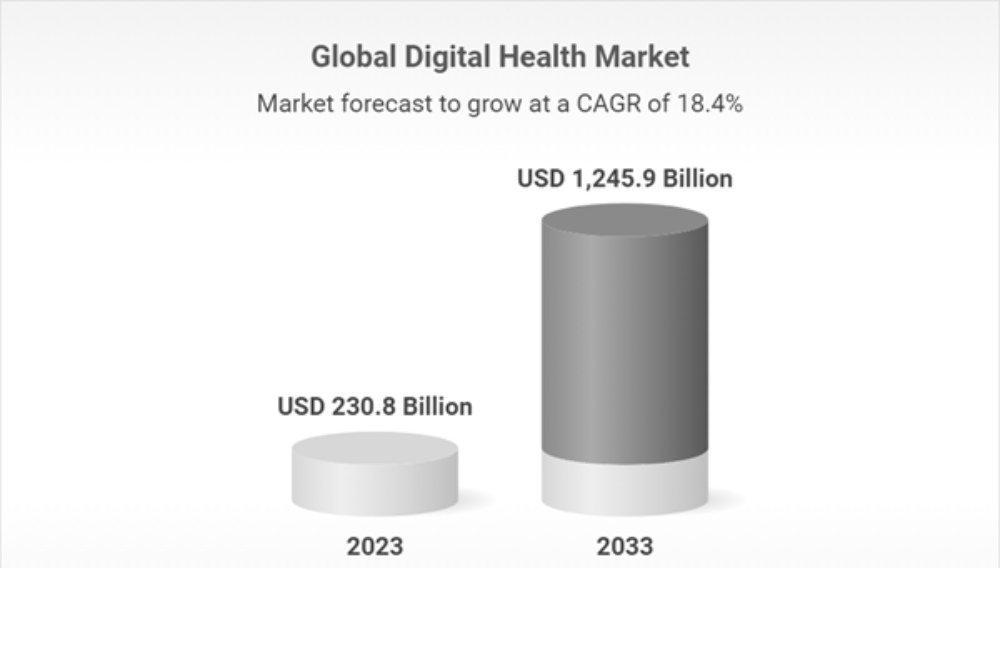
The global digital health market grew to about $230.8 billion in 2023 and is projected to reach $1.2 trillion by 2033, according to a market research report from GlobeNewswire. That growth brings more competition, so founders who test their idea quickly have an edge over those still building in private.
Compliance Sets the Foundation
Compliance is not a phase to tackle after the product works. It shapes the architecture from day one. Skipping this step early almost always means rebuilding core parts later, costing more time and money than doing it right the first time.
Three frameworks matter most for a US-based healthcare MVP:
- HIPAA: This federal law protects patient health information. The U.S. Department of Health and Human Services HIPAA page outlines the privacy and security rules covered entities and their vendors must follow.
- GDPR: This applies if the product serves patients in the European Union and sets strict rules on how personal data is collected, stored, and shared.
- FDA rules for Software as a Medical Device (SaMD): These apply only if the product makes diagnostic or treatment decisions, not for a basic scheduling or messaging tool.
Not every healthcare MVP needs full HIPAA compliance on day one. If the first version does not handle protected health information, that requirement may not apply. Founders should confirm this with a compliance advisor before assuming either way.
2026 also brings new state-level rules worth watching. California’s AB 489 stops AI systems from implying they hold a medical license, and Colorado’s AI Act requires bias testing and impact assessments for high-risk AI used in healthcare decisions. Any MVP that uses AI features, even simple chat support, should account for these rules from the outset.
On the federal side, the Centers for Medicare & Medicaid Services (CMS) continues to build out MIPS Value Pathways (MVPs), a newer reporting option for clinicians under the Quality Payment Program.
Reporting through this pathway stays optional in 2026, but CMS has said it may become mandatory as soon as 2029, according to the official CMS Quality Payment Program page. A healthcare product built to support this kind of reporting can become what a clinic needs, not just something nice to have.
What Are the Must-Have Features of a Healthcare MVP?
A healthcare MVP does not need every feature a full platform will eventually offer. It does need to handle the basics safely from the start.
- Secure login with role-based access, so staff and patients only see what they should see
- One clear clinical workflow done well, such as booking a teleconsult, viewing a lab result, or tracking a medication schedule.
- A simple dashboard or report for staff to review activity
- Encrypted storage for any patient data collected
- An audit log that records who accessed what data and when
Adding features beyond this list before testing the core workflow is a common way healthcare MVPs lose focus and burn through budget without answering the real question: does this solve a real problem for real users?
How to Build a Healthcare MVP Step by Step?

- Align the team first: Bring clinicians, compliance staff, operations, and the product owner together before writing code. Agree on the problem and what success looks like.
- Set measurable goals: Define what “working” means in numbers, such as less time on paperwork, fewer scheduling errors, or faster patient intake.
- Study the real workflow: Observe how clinicians and patients actually perform the task today. Do not guess based on assumptions.
- Scope one workflow: Pick the single use case that matters most and build only that for the first release.
- Design for compliance from the first sketch. Privacy and security decisions belong in the wireframes, not added after the build.
- Test with a small group: Launch with one clinic, unit, or small group of patients. Track real usage data, not opinions.
- Use the results to guide what comes next: Add features based on what the pilot group actually needed, not what seemed like a good idea during planning.
How Much Does It Cost to Build a Healthcare MVP?
Healthcare MVP costs vary widely because compliance, integrations, and clinical design add hours that a typical consumer app does not need.
Three things drive most of the cost difference between projects:
- Compliance and security work: Access controls, encryption, and audit logging take real engineering time, and this work has to happen before launch, not after.
- Integration needs: Any connection to an existing electronic health record (EHR) system adds complexity, since every EHR vendor has its own data format and rules.
- Clinical UX design: Screens used by nurses, doctors, or patients under stress need a clear, simple design that requires more design iterations than a typical app screen.
Rather than picking a number off a chart, founders get more value from asking a development partner to break down MVP development costs by feature and by compliance requirement. This makes it easier to see where the budget goes and where it is safe to cut scope for the first release.
As a general baseline, custom software projects in the US average $132,480 and take about 13 months to build, according to pricing data compiled from verified client reviews on Clutch. Regulated projects such as healthcare software tend to sit above that average once compliance and security work is added, since that work does not exist in a typical MVP consumer app.
Cost Breakdown of a Healthcare MVP
A healthcare MVP budget usually breaks down across six areas. The share each one takes can shift based on the workflow being built, but this gives founders a starting point for planning.
Discovery and planning (about 10 to 15 percent of the budget)
This covers stakeholder interviews, workflow mapping, and defining what success looks like before any code gets written. Skipping this step is one of the fastest ways to blow past a budget later.
Core feature development (about 40 to 50 percent of the budget)
This is the actual build: the login system, the main workflow, and the dashboard or reporting screen. This is usually the largest single line item.
Compliance and security work (about 15-25% of the budget)
This covers encrypted data storage, role-based access control, audit logging, and additional testing to confirm that the product handles patient data correctly. This is the line item that separates healthcare software from a typical consumer app, and it is also the one founders most often underestimate.
Clinical UX design (about 10 to 15 percent of the budget).
Clinicians and patients often use healthcare software under time pressure or stress, so screens need more design testing than a typical app to confirm they work in real conditions, not just in a demo.
QA and testing (about 10 to 15 percent of the budget)
Healthcare software needs more testing cycles than most software, since a missed bug can affect patient data or patient safety instead of just a broken button.
Project management and deployment (about 5 to 10 percent of the budget)
This covers ongoing coordination among the founder, the compliance advisor, and the MVP development team, as well as the work of moving the product from a test environment to a live one.
Founders should also plan for post-launch costs. Software needs regular updates, security patches, and ongoing monitoring once it is live, and healthcare software carries extra weight here due to ongoing compliance obligations. Setting aside a portion of the original build cost each year for maintenance keeps the product compliant and stable under real use.
How Does EHR Integration Work in Healthcare Apps?
Most healthcare products eventually need to connect with an EHR system so patient data can move between the new tool and existing hospital or clinic records.
This work is often skipped in the first MVP version, and that is usually the right call. A narrow pilot can demonstrate value through manual data entry or a simple one-way data feed before a full EHR connection is established.
Founders should plan integration points early, even if the first release launches without them. A product built with an open, well-documented data structure connects to an EHR system much more easily than one built without that in mind from the start.
What Are the Biggest Healthcare MVP Mistakes?
- Treating compliance as something to figure out after launch
- Skipping direct observation of how clinicians and patients actually work
- Trying to serve too many types of users in the first release
- Weak access control or storing patient data without encryption
- Launching without clear, measurable goals to judge success
Each of these mistakes tends to show up the same way. The team spends months building and launching, only to find that they cannot tell whether the product worked or why users stopped using it.
Examples of Healthcare MVPs That Grew Into Larger Products
Many well-known health tech products started with one narrow feature.
A simple appointment-booking tool can grow into a full telehealth platform once the core scheduling workflow proves itself in real clinics. A basic symptom checker can turn into a broader health guidance platform once the first version shows patients trust it and return to use it.
The pattern holds across the industry. Products that start narrow and earn trust with one workflow tend to scale better than those that launch with a long feature list and no proof any of it gets used.
How to Choose the Right Healthcare MVP Development Partner?
The right MVP development partner treats compliance as part of the build process, not something added near the end. A few questions help separate a strong partner from one who will slow the project down:
- Has the team built products that handle protected health information before?
- Can they explain how HIPAA, GDPR, or FDA SaMD rules affect the specific product being built, not just general healthcare software?
- Will they push back on a long feature list in favor of a smaller, testable first release?
A partner who pushes for a narrow, well-tested MVP is doing the founder a favor, even if it feels slower at first. This approach saves money and protects the product’s reputation once real patients and clinicians start using it.
Common Questions
What Is a Healthcare MVP?
A healthcare MVP (Minimum Viable Product) is the simplest version of a healthcare application that solves a specific problem and allows founders to validate their idea with real users before investing in a full-scale product.
Does Every Healthcare MVP Need to Be HIPAA Compliant?
Not every healthcare MVP falls under HIPAA requirements. If your product does not collect, store, or transmit protected health information (PHI), other compliance rules may apply. Consult a healthcare compliance expert before development to determine your legal obligations.
How Long Does It Take to Build a Healthcare MVP?
Most healthcare MVPs take 3–6 months to develop. The timeline depends on workflow complexity, required features, third-party integrations, testing, and compliance or security requirements.
Can You Launch a Healthcare MVP Without EHR Integration?
Yes. Many successful healthcare MVPs launch without direct EHR integration. Founders validate the core workflow first and add integrations once the product proves value and user demand.
What’s the Difference Between a Healthcare MVP and a Full SaaS Platform?
A healthcare MVP focuses on validating a single problem or workflow with minimum required features. A full SaaS platform supports multiple organizations, advanced integrations, user management, analytics, and long-term scalability.
Why Should Healthcare Startups Build an MVP First?
Building an MVP reduces development costs, shortens time-to-market, and provides real user feedback. It helps startups validate demand before committing to larger investment.
How Much Does It Cost to Build a Healthcare MVP?
The cost varies based on features, complexity, compliance needs, and integrations. A simple healthcare MVP generally costs much less than building a full-featured platform because it focuses only on essential functionality.
What Features Should a Healthcare MVP Include?
A healthcare MVP should include only core features needed to validate the primary user workflow. Common features include user authentication, appointment scheduling, patient profiles, secure messaging, and basic reporting.
Should a Healthcare MVP Include AI Features?
Not necessarily. AI should be included only if it directly supports the core value proposition. Many successful healthcare MVPs validate their product without AI and add intelligent features later.
Can a Healthcare MVP Scale Into a Full Product?
Yes. A well-planned MVP is built with future growth in mind. Once product-market fit is validated, additional features, integrations, and enterprise capabilities can be added incrementally.
Who Should Build a Healthcare MVP?
Healthcare MVPs are best developed by teams experienced in healthcare software, security, regulatory requirements, and scalable cloud architecture. Industry expertise helps avoid costly compliance and technical mistakes.
What Are the Biggest Mistakes When Building a Healthcare MVP?
Common mistakes include building too many features, failing to plan for compliance, delaying user testing, skipping market validation, and integrating with complex systems before proving core product value.
How Do You Validate a Healthcare MVP?
Validation comes from real users. Track user adoption, engagement, workflow completion, customer interviews, and retention to determine if your solution solves a meaningful healthcare problem.
Can You Build a Healthcare MVP for Both Patients and Providers?
Yes, but many startups begin by focusing on one primary user group. Solving a single workflow for patients or providers first often leads to faster validation and a more focused product strategy.
Final Notes
A healthcare MVP succeeds by proving one clinical workflow works safely and adds real value. It does not need every feature on a founder’s wish list. It needs a clear scope, built-in compliance from the start, and real feedback from the people who will use it every day.
Founders who follow this path spend less money finding out what does not work, and they walk into their next funding conversation or pilot expansion with real data behind them, not guesses.