MVP development costs are among the first real questions founders face. You have an idea, maybe a pitch deck, and a budget that needs to stretch. The problem is that most cost guides either give vague ranges or skip the details that actually change the number.
MVP Development Cost: Key Takeaways
- MVP development cost $15,000 to $150,000 depending on complexity and team location.
- Developer location is the biggest hourly rate driver: US rates hit $110-$230/hr vs. $15-$60/hr in Asia.
- Freelancers are cheapest. Agencies offer the best middle ground. In-house teams are most expensive.
- No-code tools can cut costs by up to 65% for simple builds.
- Always budget for hidden costs: hosting, API fees, bug fixes, and post-launch updates.
- Cut scope before you build, not during. Use MoSCoW.
- Get a written scope ready before asking for quotes.
- Treat MVP cost as a learning investment, not just a build expense.
This article breaks down every factor that drives MVP cost, gives you real numbers by product type and team model, and shows you how to scope your build without blowing your budget.
What Is an MVP and Why Does Cost Vary So Much?
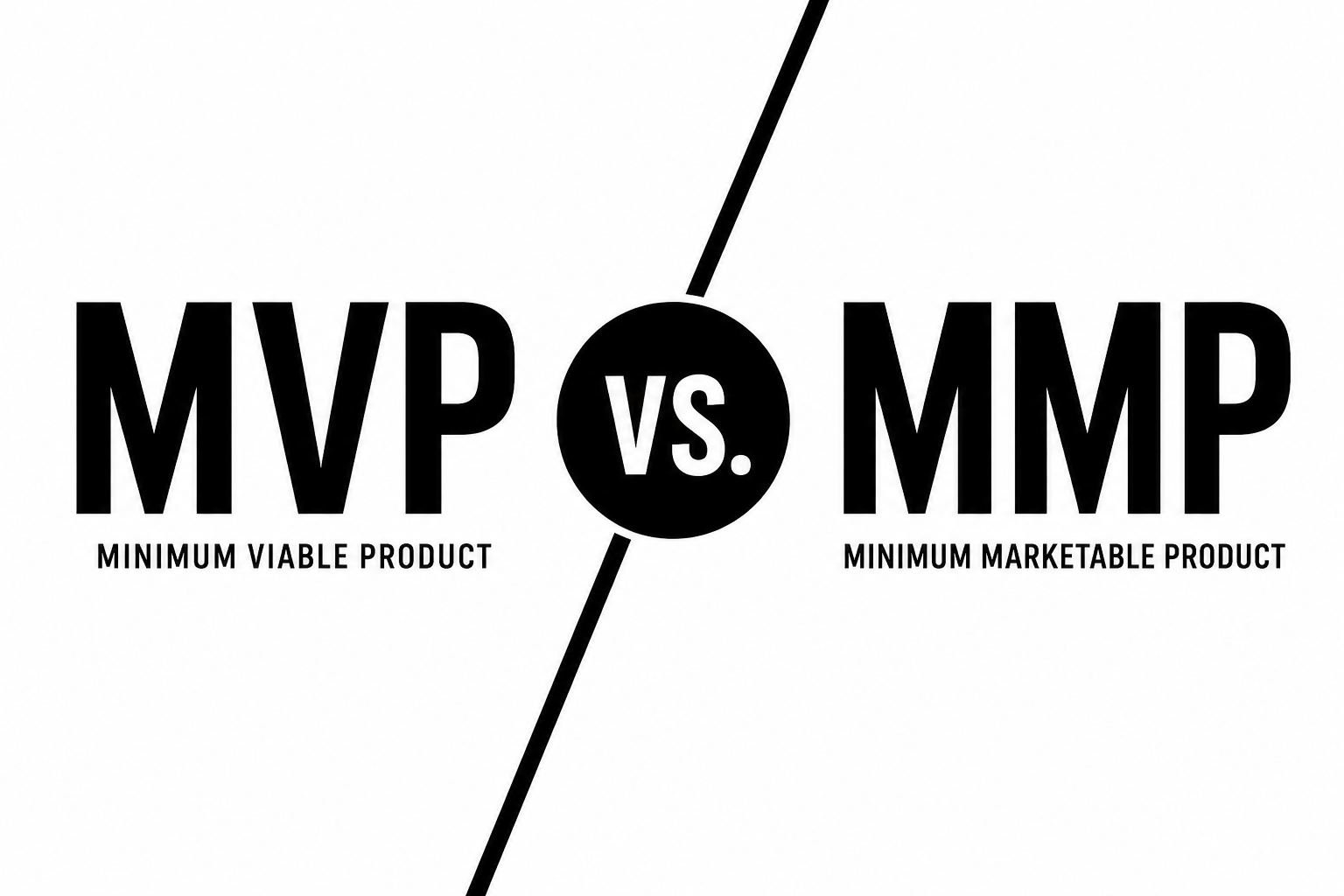
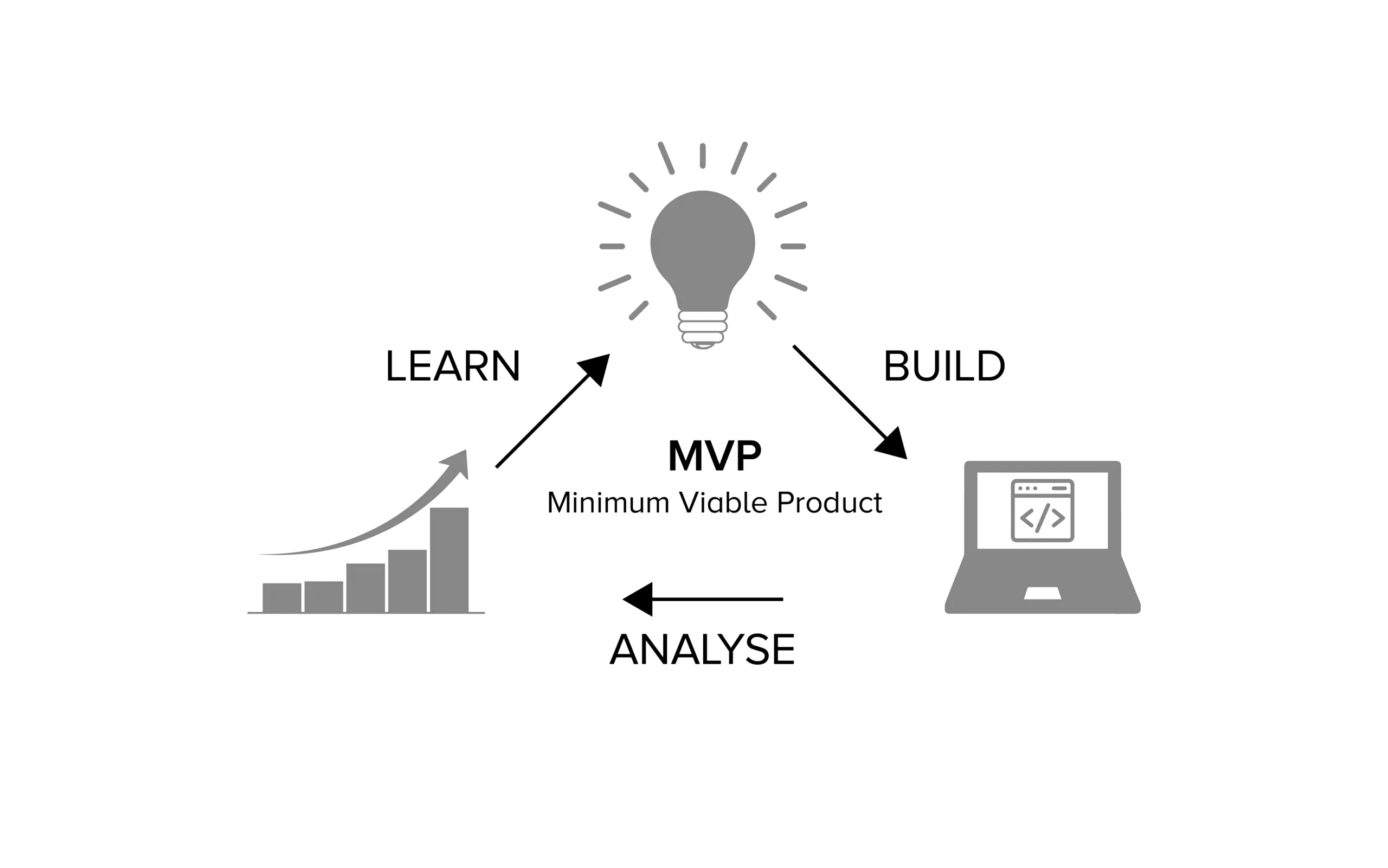
An MVP (Minimum Viable Product) is the simplest working version of your product that lets real users interact with it and give you feedback. It is not a prototype. It is not a mockup. It is a functioning product with enough features to test your core idea, nothing more.
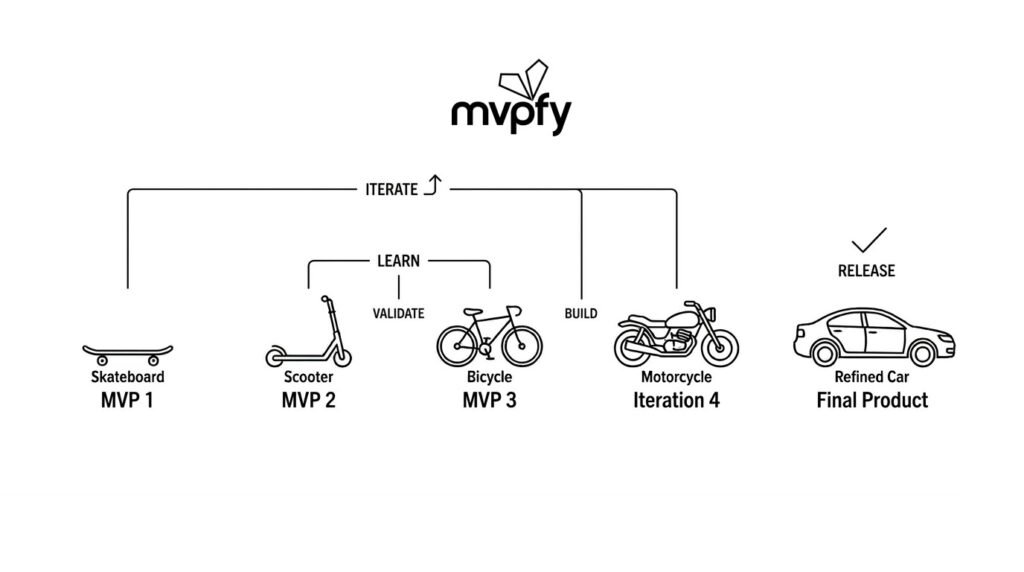
In 2026, the average MVP cost ranges from $15,000 to $150,000 or more. The price depends on factors like team structure, technology choice, and project complexity.
That gap is wide for a reason. A simple booking tool for a local service business is an MVP. A two-sided marketplace with payments, real-time messaging, and user verification is also an MVP. Both are MVPs but not the same build.
The core variables that create this spread are: what you are building, who builds it, where they are located, and how many features make it into version one.
The Main Factors That Affect MVP Development Cost
Six main factors shape the cost of MVP development: product type, feature set, design complexity, third-party integrations, team structure, and where your developers are based.
1. Product type matters
A web app and a native mobile app have different development paths. A web app usually costs less to start. A mobile app built separately for iOS and Android can cost significantly more.
2. Feature complexity is where most budgets go sideways
User authentication, a dashboard, and one core function are manageable. Adding real-time notifications, AI-powered recommendations, or custom reporting increases costs quickly.
3. Design requirements affect both time and money
A standard UI using pre-built component libraries costs far less than a fully custom interface with animations and brand-specific styling.
4. Each third-party integration adds hours to a build
Payment gateways, CRM connections, SMS services, and analytics tools require setup, testing, and ongoing maintenance. Budget for each separately.
5. Team structure
Team structure is one of the biggest cost levers. Freelancers, agencies, offshore teams, and in-house developers all carry different price tags and trade-offs.
6. The developer’s location
The developer’s location significantly affects your hourly rate. In North America and Western Europe, MVP development rates average $50 to $200 per hour. Eastern Europe and Latin America MVP development is more cost-effective options, typically $30 to $100 per hour. Asia and Africa have some of the lowest MVP development rates, often $15 to $60 per hour.
MVP Cost by Development Approach
The way you choose to build your MVP, whether with freelancers, agencies, offshore teams, or in-house staff, has a major impact on the total cost.
Freelancers MVP Developer
Freelancers usually charge between $4,000 and $15,000 to develop an MVP. They work well for simple MVPs or single-platform apps. This option is flexible and affordable, but you’ll need to spend more time managing the project.
The main challenge with freelancers is keeping everyone coordinated. If your MVP needs a designer, a backend developer, and a QA tester, you’ll be managing three people on three different schedules. A delay from one person can slow down the whole project.
Offshore MVP Development Agencies
Outsourced MVP Development agencies typically charge between $10,000 and $35,000, making them a good fit for medium-complexity projects. These teams bring specialized skills and keep costs in check, but you’ll need to pay close attention to communication.
Agencies in Eastern Europe and Latin America often offer the best mix of cost and quality for US founders. Working with Latin American teams also means better time zone alignment.
Onshore MVP Agencies (US/Western Europe)
In North America and Western Europe, MVP developer rates are usually $110 to $230 per hour. Building a full MVP here costs more overall, but you get easier communication, better legal protection, and usually less back-and-forth about requirements.
In-House MVP Development Teams
In-house MVP Development teams are perfect for complex, long-term projects and cost between $25,000 and $150,000. While offering full control over processes, this approach comes with higher operational costs and longer recruitment times.
By 2026, even a small in-house team in the US could need an annual budget of over $300,000. This approach usually doesn’t make sense for MVPs unless you have a lot of funding.
No-Code / Low-Code MVP Tools
A Gartner report found that businesses using low-code and no-code platforms built MVPs 50-70% faster and cut costs by 50-65% compared to traditional development.
Tools like Webflow, Bubble, and FlutterFlow are great for some products. However, they have real limits. If you need complex custom logic or special performance, these platforms can’t always keep up.
MVP Development Cost by Industry Type
MVP cost varies significantly by industry. Regulated sectors like healthcare and fintech start higher because compliance architecture adds cost before any user-facing feature is built. Unregulated products like SaaS tools or e-commerce apps have more flexibility at the low end.
Here is a breakdown of what to expect by industry.
1. Startup MVP (General Tech / SaaS)
- Startup MVP development Cost range: $15,000 to $80,000
Startup MVP is the most common type of MVP. It covers SaaS tools, productivity apps, internal business software, and early-stage web or mobile products that do not operate in a regulated industry.
The low end applies when you build a single-feature product on a standard tech stack with pre-built UI components. A simple MVP with a landing page and basic functionality runs $30,000 to $55,000. A standard SaaS MVP with a multi-tenant dashboard typically costs between $55,000 and $140,000.
Costs rise by adding multiple user roles, building admin dashboards, connecting third-party APIs, or going cross-platform from day one. Keep the first version to one user type, one core action, and one platform.
2. Healthcare MVP (HealthTech / Telemedicine)
- Healthcare MVP Cost range: $50,000 to $200,000+
Healthcare is one of the most expensive MVP categories because compliance is mandatory. Healthcare MVP development requires HIPAA and GDPR compliance, privacy-by-design principles, encrypted data storage, role-based access control, audit logs, and minimal handling of personal health information from the start.
Key cost drivers in healthcare include HIPAA compliance infrastructure, EHR integrations with platforms like Epic or Cerner, video consultation features, and medical device integrations.
Failing to build compliance from the start results in extra legal, due diligence, licensing, and certification costs after a compliance incident, plus redesign of product architecture and development delays. These issues can cost 5-15% of the total MVP development budget.
A real example: a California-based healthcare startup originally estimated native app development at around $90,000. By switching to Flutter for cross-platform development, they reduced the total cost to $54,000 and launched within two months, ahead of schedule.
If you are building in healthcare, budget for compliance from day one. Retrofitting it later costs more than building it correctly the first time.
3. Fintech MVP (Payments, Lending, Banking, Investing)
Cost range: $40,000 to $150,000+
Fintech MVPs carry elevated costs because financial data handling, encryption, and regulatory compliance add significant work before the product is usable. A fintech product routinely starts at $50,000 and can exceed $150,000 before any user-facing feature is built, purely due to regulatory architecture.
Compliance standards like PCI-DSS (for card payments), GDPR, and SOC 2 each add architecture requirements that a standard web app does not need. Projects involving fintech solutions or healthcare compliance typically start from $75,000 due to additional architecture, security, and infrastructure requirements.
Transaction fees from payment processors add ongoing costs. Stripe, for example, charges 2.9% plus $0.30 per transaction, which adds up quickly once you have real users. Budget that into your unit economics early.
A real example: a fintech startup from New York targeting extensive analytics and reporting reduced their MVP development from an $80,000 estimate to about $48,000 by cutting scope to essential functionality, allowing a faster launch with critical feedback loops.
4. E-Commerce MVP (Marketplaces, DTC, Retail)
- Cost range: $20,000 to $80,000
A simple direct-to-consumer store built on a platform like Shopify sits at the low end of this range and may not require custom development. A custom two-sided marketplace with vendor onboarding, escrow payments, and review systems is built entirely differently.
A straightforward e-commerce MVP can cost $20,000 to $60,000. A custom marketplace with vendor onboarding, reviews, and escrow payments typically starts at $80,000. Key cost drivers include payment gateway integrations, inventory management, vendor dashboards, logistics integrations, and search and filtering complexity.
For most early-stage e-commerce founders, the smarter move is to use an existing platform for the first version and only build custom when you have proven demand and clear product-market fit.
5. EdTech MVP (Education, Learning, Coaching)
- Cost range: $15,000 to $70,000
EdTech MVPs are generally less expensive than healthcare or fintech because the regulatory burden is lower. Costs depend heavily on the type of content delivery and interactivity involved.
EdTech costs range based on content interactivity and media delivery systems. A text-based course platform with basic user accounts sits at the low end. A live video tutoring platform with scheduling, payments, recording, and progress tracking pushes toward the higher range.
Watch for video infrastructure costs. Building live streaming from scratch is expensive. Using third-party services like Twilio, Daily.co, or Agora reduces development time but adds per-minute usage fees that scale with your user base.
6. AI-Powered MVP
- Cost range: $60,000 to $200,000+
AI products are the most variable in this list because cost depends on whether you build on top of an existing model or train your own. Most startups should start with the former.
AI-native products where the model itself is the product can run $60,000 to $200,000 or more, with 15-30% of that budget going to the AI layer alone.
An AI-powered MVP with LLM integrations, predictive features, or RAG pipelines typically falls in the $140,000 to $300,000 range.
If your core value proposition does not depend on a custom model, use existing APIs. GPT-4o, Claude, or Gemini can power most AI features in an MVP without the cost of training or fine-tuning your own model. Save that investment until after you have validated demand.
7. On-Demand / Marketplace MVP (Uber-style, Service Platforms)
- Cost range: $40,000 to $120,000
Two-sided platforms are complex because you build two separate products: one for supply, one for demand. Both need to work well from day one, or neither side has a reason to use the platform.
Core costs include dual user flows, real-time matching or availability logic, in-app payments, ratings and reviews, and notifications. Adding GPS tracking for location-based services increases costs further.
The most common mistake in this category is building both sides at full scope before testing if either side shows up. Start by manually managing supply, then automate once you have proven both sides of the market exist.
Cost Comparison at a Glance
| General SaaS / Startup | $15,000 to $80,000 | Feature count and user roles |
| Healthcare / HealthTech | $50,000 to $200,000+ | HIPAA compliance and EHR integrations |
| Fintech | $40,000 to $150,000+ | PCI-DSS, encryption, regulatory architecture |
| E-Commerce / Marketplace | $20,000 to $80,000 | Payment systems and vendor flows |
| EdTech | $15,000 to $70,000 | Video infrastructure and interactivity |
| AI-Powered Products | $60,000 to $200,000+ | Model integration and data pipelines |
| On-Demand / Services | $40,000 to $120,000 | Dual user flows and real-time logic |
The pattern is clear: the more compliance, real-time processing, or two-sided complexity your product needs, the higher the floor on your MVP budget. Knowing your industry’s cost floor before scoping helps you plan runway, pick the right team, and avoid budget surprises that stall most early builds.
Typical MVP Cost Ranges by Product Type
MVP costs vary depending on the product. For instance, building a simple web app might start at $10,000. More complex products, such as AI-driven apps or marketplaces, can reach $150,000 or higher.
Here’s a look at typical MVP costs according to current market trends.
- Simple web app (landing page and basic logic): $10,000 to $25,000. This usually includes user authentication, a basic dashboard, and one main feature.
- Mobile app (single platform): $15,000 to $40,000. A basic mobile MVP with core features often costs about $15,000. If you add payment gateways or AI features, the price can go up to $50,000 or more.
- Mobile app (cross-platform): Using tools like Flutter or React Native can lower MVP development costs by 30 to 40 percent. This helps you launch faster and save money.
- SaaS product with user accounts and dashboards: $25,000 to $75,000. Costs increase as you add more user roles, billing features, and admin controls.
- Two-sided marketplace: $40,000 to $120,000. Marketplaces need two complete user flows, trust features, and payment processing, which makes them more complex.
- AI-powered or data-heavy products: $60,000 to $150,000 or more. Custom model training, data pipelines, and the needed infrastructure can drive costs to the higher end.
What Is Usually Included in an MVP Budget (And What Is Not)?
A standard MVP budget covers discovery, design, development, QA, and deployment. It usually does not include hosting, third-party tool fees, security audits, or post-launch maintenance.
Here is what most agencies and developers include in their quoted price:
- Discovery and scoping cover requirements gathering, user story mapping, and project planning. Some agencies charge for this separately.
- MVP UI/UX design includes wireframes, screen flows, and visual design. Budget more if you need custom illustrations or complex interaction states.
- Frontend and backend development is the core of any MVP budget. This is where most of the hours go.
- QA and testing should account for 10-15% of your total development budget. Post-development QA, user testing, and bug fixing also add to the MVP cost, often another 10-15%.
- Deployment covers setting the product up on a server and making it live.
What most founders forget:
- Domain registration and SSL certificates
- Cloud hosting (AWS, GCP, or similar), which is ongoing
- Third-party API costs that scale with usage
- App store submission fees ($99/year for Apple, $25 one-time for Google)
- Security audits, especially for fintech or health products
- Nearly all successful MVPs require adjustments after launch. Research from Startup Genome shows that most successful startups spend about 50% of their initial startup MVP development budget on improvements in the first year after launch.
Plan for this from day one. A launch is not the end of spending.
How to Scope Your MVP to Control Costs?
The best way to control MVP development costs is to cut scope before development starts using a clear prioritization method like MoSCoW.
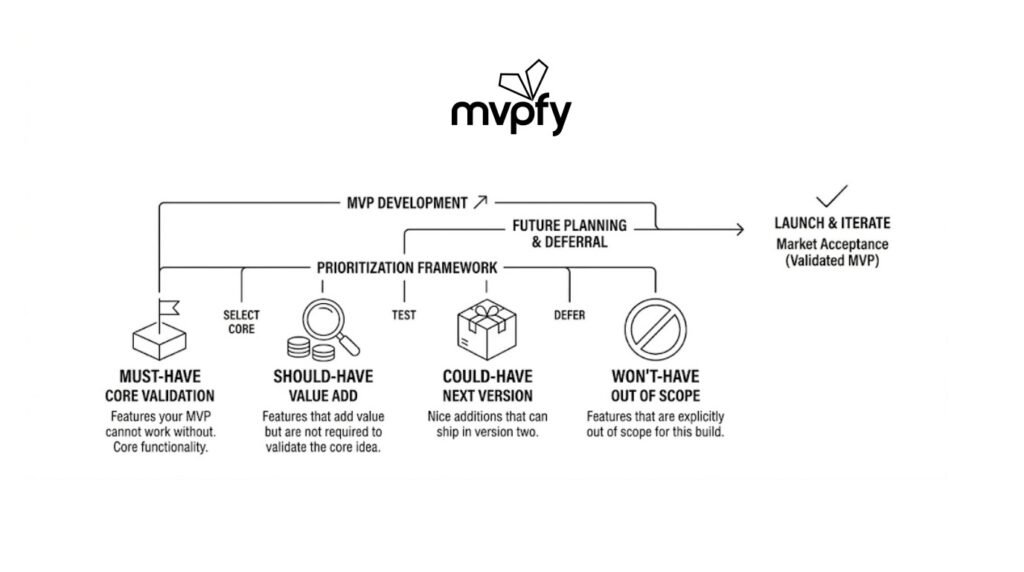
Scope creep is the biggest reason MVPs go over budget. It rarely comes from dishonest vendors. Instead, founders add features mid-build because they seem easy or important.
The MoSCoW method keeps this in check:
- Must-have: Features your MVP cannot work without
- Should-have: Features that add value but are not required to validate the core idea
- Could-have: Nice additions that can ship in version two
- Won’t-have: Features that are explicitly out of scope for this build
This prioritization keeps the MVP lean and focused on validation.
A practical test: for every feature on your list, ask if a user could still validate your core idea without it. If yes, cut it from version one.
Watch for red flags of scope creep in early talks with developers. If a vendor immediately agrees to every feature without pushing back, it signals they are optimizing for contract size rather than your needs.
How to Get Accurate Quotes from MVP Developers?
To get an accurate MVP development quote, have a written scope, user stories, and a clear list of must-have features before contacting any vendor.
Ballpark quotes without documentation are nearly useless. Two developers can review the same app idea and quote $20,000 and $80,000 because they made different assumptions about what is included.
Before you reach out to any agency or freelancer, prepare:
- A one-page product description
- A list of must-have features (use MoSCoW)
- User stories: “As a [user type], I want to [do something] so that [outcome]”
- Any existing wireframes or reference apps you like
- Your target platform (web, iOS, Android, or cross-platform)
- Your timeline and budget range
Fixed-price vs. time-and-materials contracts:
Fixed-price contracts give budget certainty but punish changes mid-build. If you discover something important from early user feedback, changing course is expensive.
A time-and-materials model lets you shift scope when early users respond. This freedom is essential for MVP development for startups.
For MVPs specifically, time-and-materials often makes more sense because your requirements will evolve. Just make sure you set a clear budget ceiling upfront.
Questions to ask any vendor:
- Can you share case studies from similar products?
- How do you handle scope changes mid-project?
- Who owns the code when the project ends?
- What does post-launch support cost?
- Is QA included or billed separately
ROI Thinking: MVP Cost vs. What You Are Actually Buying!
The real value of an MVP is not the product itself. It is the validated learning you get from putting it in front of real users.
Most founders think of MVP cost as a build cost. A better frame is learning cost. You pay to find out if your idea works before spending 5x more on a full product.
Y Combinator reports that startups with MVPs and early user traction are 4 times more likely to receive funding. Investors love seeing real-world results rather than just ideas on paper.
According to a Startup Genome report, startups that use an MVP approach have a 60% higher success rate than those that launch with fully-featured products.
The cost of building the wrong thing is almost always higher than a well-scoped MVP. Statistics show 42% of apps fail because the market does not need them. An MVP lets you check that before spending serious money.
Budget rule of thumb: your MVP should cost 20-30% of your first-year budget. If you have $100K for year one, spend $20-30K on the MVP and save the rest for iteration and growth.
Define your success metrics before you build. Pick 2-3 numbers that show whether the MVP worked: user sign-ups, paid conversions, session length, or whatever matches your model. If you hit those numbers, you scale. If not, you learn something worth the build cost.
Quick Reference: MVP Cost Summary
| Development Approach | Cost Range |
|---|---|
| No-code / low-code | $5,000 to $25,000 |
| Freelancers | $4,000 to $15,000 |
| Offshore agency | $10,000 to $35,000 |
| Onshore agency (US/UK) | $30,000 to $150,000+ |
| In-house team (US) | $100,000+ annually |
| Product Type | Estimated Cost |
|---|---|
| Simple web app | $10,000 to $25,000 |
| Single-platform mobile app | $15,000 to $40,000 |
| Cross-platform mobile app | $20,000 to $50,000 |
| SaaS with accounts and billing | $25,000 to $75,000 |
| Two-sided marketplace | $40,000 to $120,000 |
| AI or data-heavy product | $60,000 to $150,000+ |