Rhome – Real Estate SaaS CRM Design and Development

Rhome is a SaaS-based Customer Relationship Management (CRM) platform tailored for real estate agencies.

Positioned at the intersection of proptech and enterprise software, it streamlines how real estate professionals manage leads, properties, clients, and deals in a single web application. The project was designed in Figma by Jibon Rifat and Mohima Haque Sristy.
UX, SAAS, CRM
Rhome
NA

The Challenge

Real estate agencies operate in a high-stakes, relationship-driven environment. Yet most of them rely on fragmented tools — spreadsheets for leads, email threads for client communication, and separate portals for property listings. This creates:

  • Data silos — no unified view of a client’s journey from lead to close
  • Lost opportunities — follow-ups missed due to poor pipeline visibility
  • Inefficient workflows — agents switching between multiple tools daily
  • Poor reporting — managers lack real-time performance insights

Generic CRMs like Salesforce or HubSpot are too broad and complex for smaller or mid-sized real estate agencies that need domain-specific features out of the box.

Design Goals

  • Build a real estate-first CRM with relevant entities: properties, listings, agents, and deals
  • Create a clear, scannable dashboard that gives managers and agents instant situational awareness
  • Design intuitive pipeline management so no lead falls through the cracks
  • Ensure the UI feels modern and trustworthy — befitting a premium SaaS product
  • Deliver a scalable design system that can grow with the product

Design Process:

1. Research & Discovery

The designers started by studying the workflows of real estate professionals — understanding the difference between what a sales agent needs daily versus what an agency owner needs strategically. Key personas were identified: the Field Agent, the Sales Manager, and the Agency Admin.

Competitive analysis was conducted against tools like Propertybase, Follow Up Boss, and LionDesk to identify gaps — particularly in dashboard clarity and mobile-friendliness.

2. Information Architecture

The IA was structured around five core modules:

  • Dashboard — high-level KPIs and activity overview
  • Leads & Contacts — pipeline and client management
  • Properties — listing management with status tracking
  • Deals — transaction stages from negotiation to closing
  • Reports & Analytics — performance metrics for agents and managers
3. Wireframing & Iteration

Low-fidelity wireframes were explored in Figma to validate the navigation structure and content hierarchy before moving into high-fidelity. Multiple iterations were done on the dashboard layout to balance data density with visual clarity.

4. High-Fidelity Design

The final screens were crafted with a polished, modern SaaS aesthetic — leveraging a structured design system with consistent components, spacing, and color tokens.

UI/UX Decisions

1. Visual Style

Rhome uses a dark-accented, professional color palette — likely a deep navy or neutral dark base with vibrant accent colors (e.g., teal or indigo) for CTAs and status indicators. This conveys trust, professionalism, and focus — qualities important in a financial and legal domain like real estate.


2. Typography & Spacing

Clean sans-serif typography with clear hierarchy ensures that data-heavy screens (like the dashboard and reports) remain readable and uncluttered. Generous spacing between components prevents cognitive overload.


3. Dashboard Design

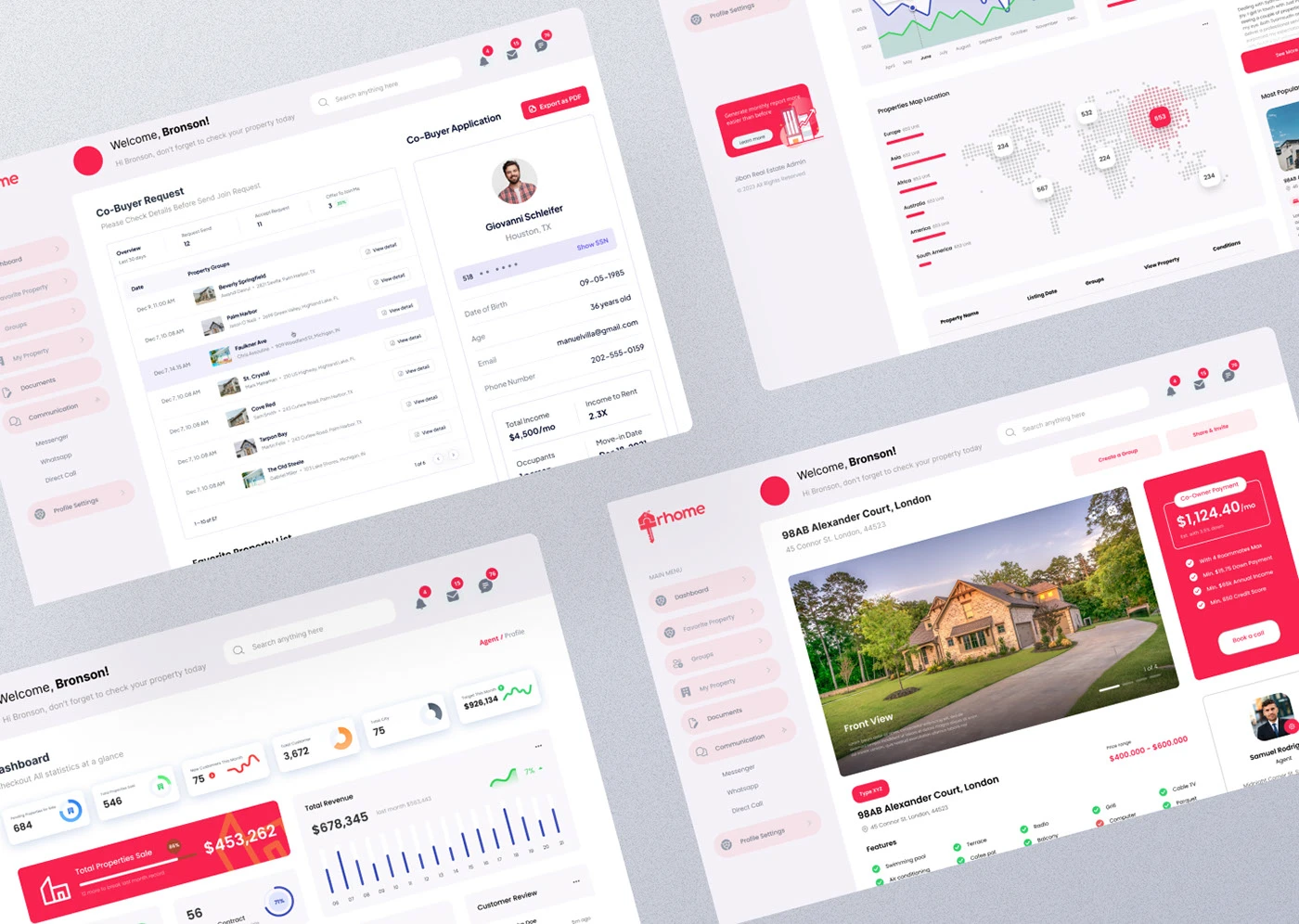
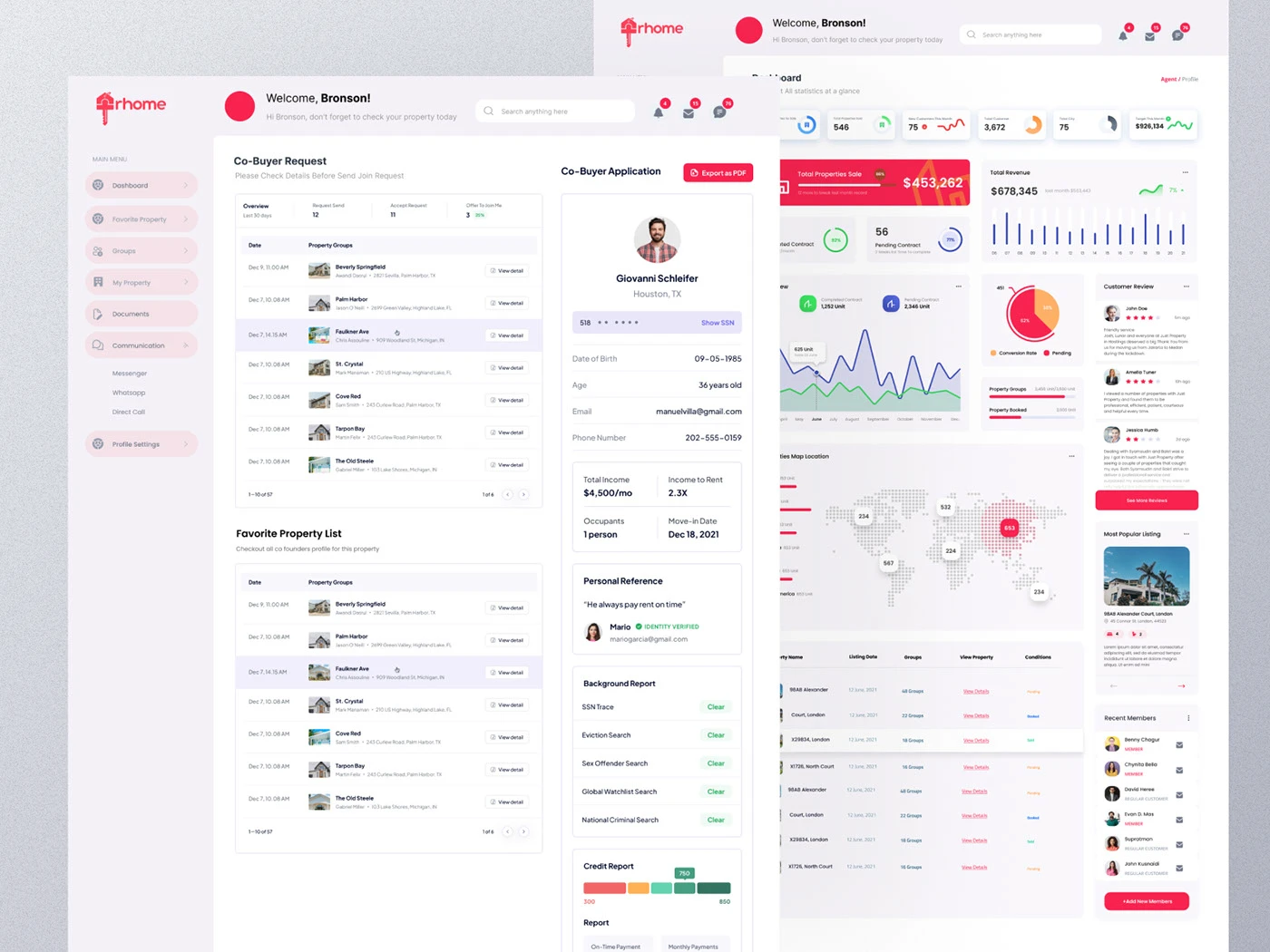
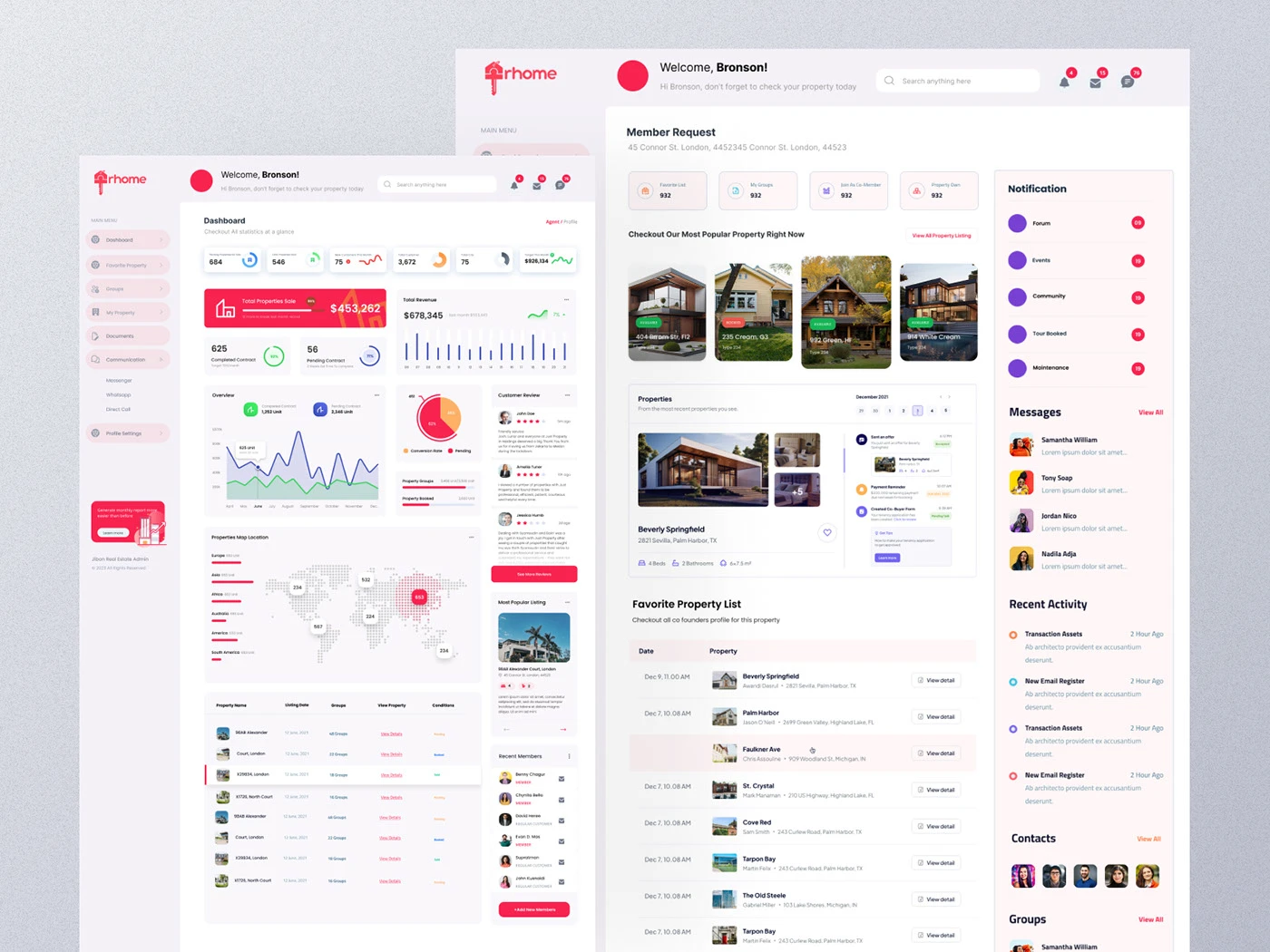
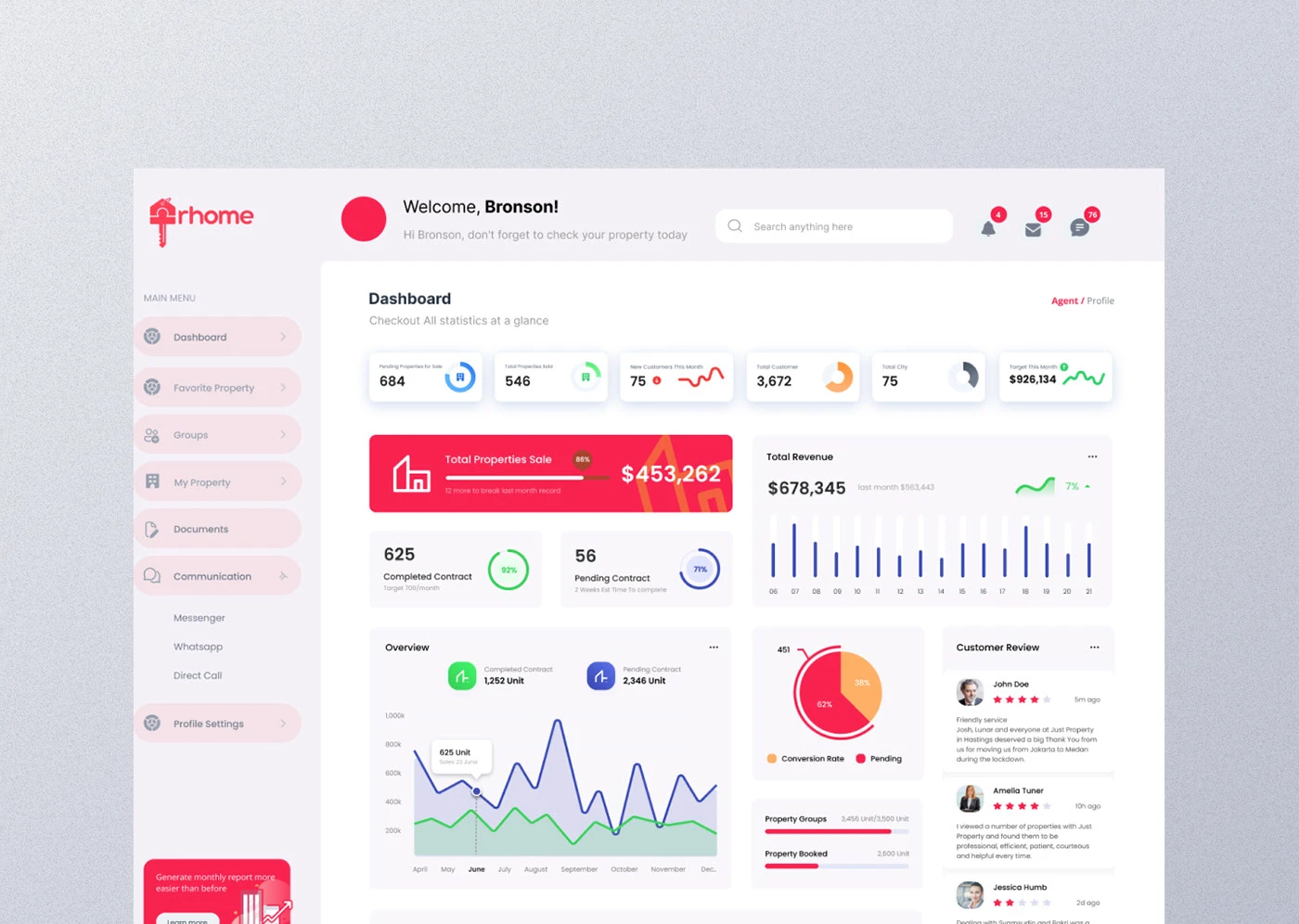
The dashboard is the heartbeat of Rhome. Key decisions include:


  • KPI cards at the top for at-a-glance metrics (active leads, deals closed, revenue pipeline)
  • Charts and graphs for trend visualization (monthly performance, conversion rates)
  • Recent activity feed so agents always know what’s pending
  • Agent leaderboard to drive performance visibility


4. Navigation

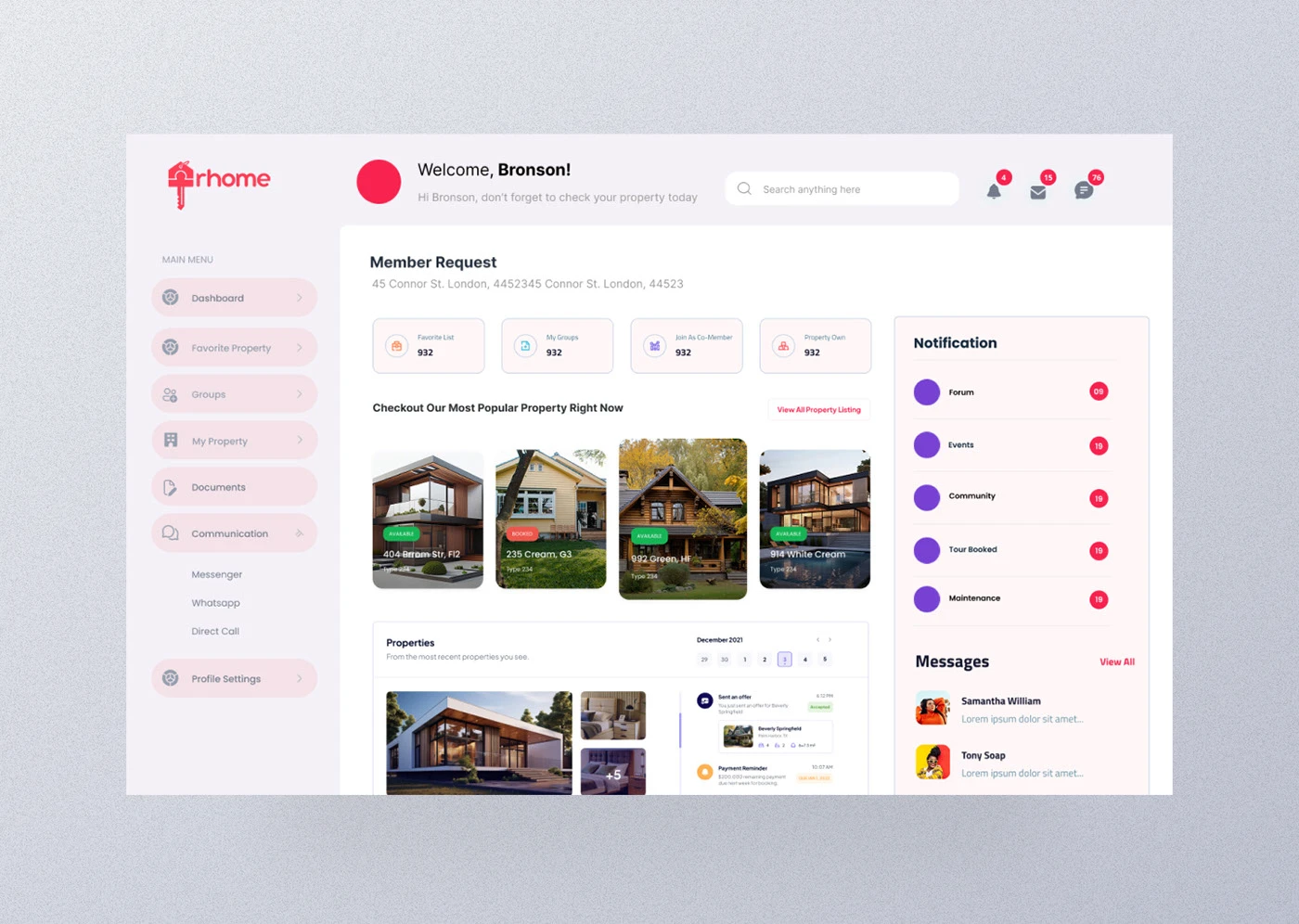
A left-side fixed navigation pattern was chosen — standard for SaaS dashboards — keeping primary sections always accessible without interrupting the content area. Icons with labels reduce ambiguity.

 
5. Component Consistency

A reusable component library was built — buttons, form fields, modals, tables, badges, and cards — ensuring visual consistency across all 11+ screens and making the design scalable for future features.


6. Status & Feedback

Lead and deal statuses are communicated through color-coded badges (e.g., New, In Progress, Closed, Lost) so agents can triage their pipeline at a glance without reading every row.


Features & Screens

Based on the 11 design screens in the project, Rhome likely covers:

ScreenPurpose
Landing / LoginBranded entry point for the SaaS product
Main DashboardKPIs, charts, activity summary
Lead ManagementList/kanban view of all leads with filters
Lead DetailIndividual lead profile, history, and notes
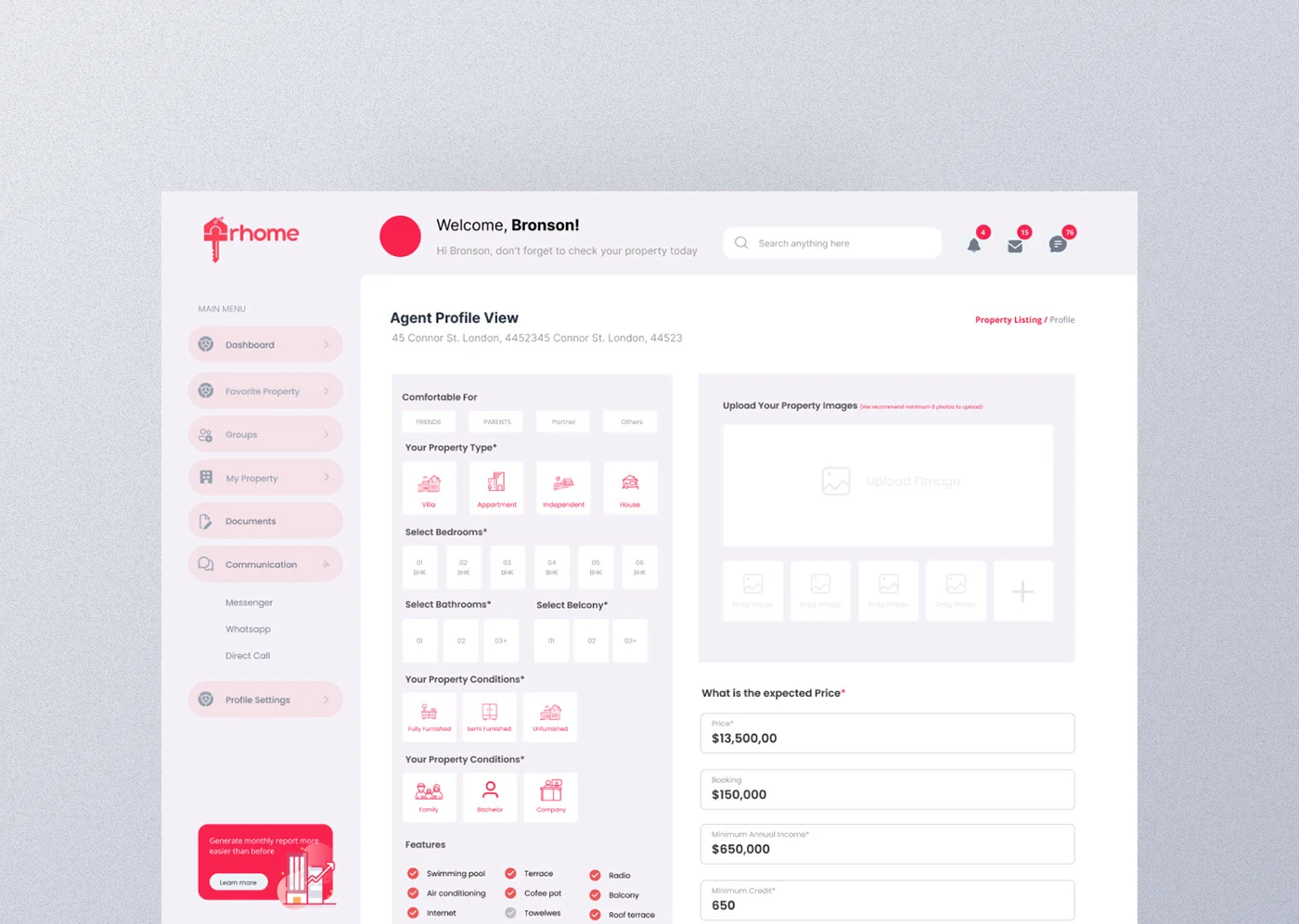
Property ListingsGrid/list of properties with status tags
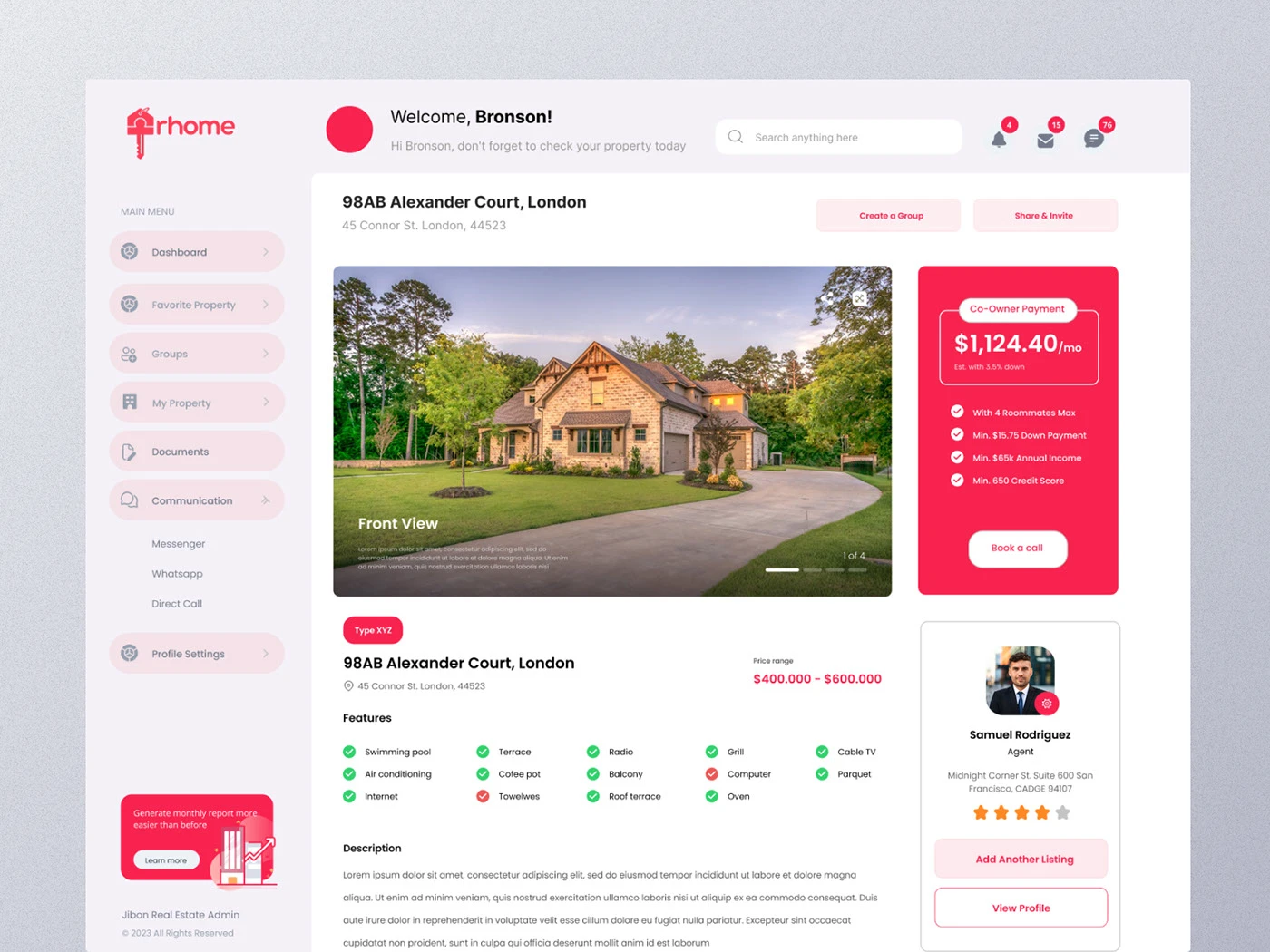
Property DetailFull listing info, linked agent, and deal status
Deals PipelineKanban-style deal stages
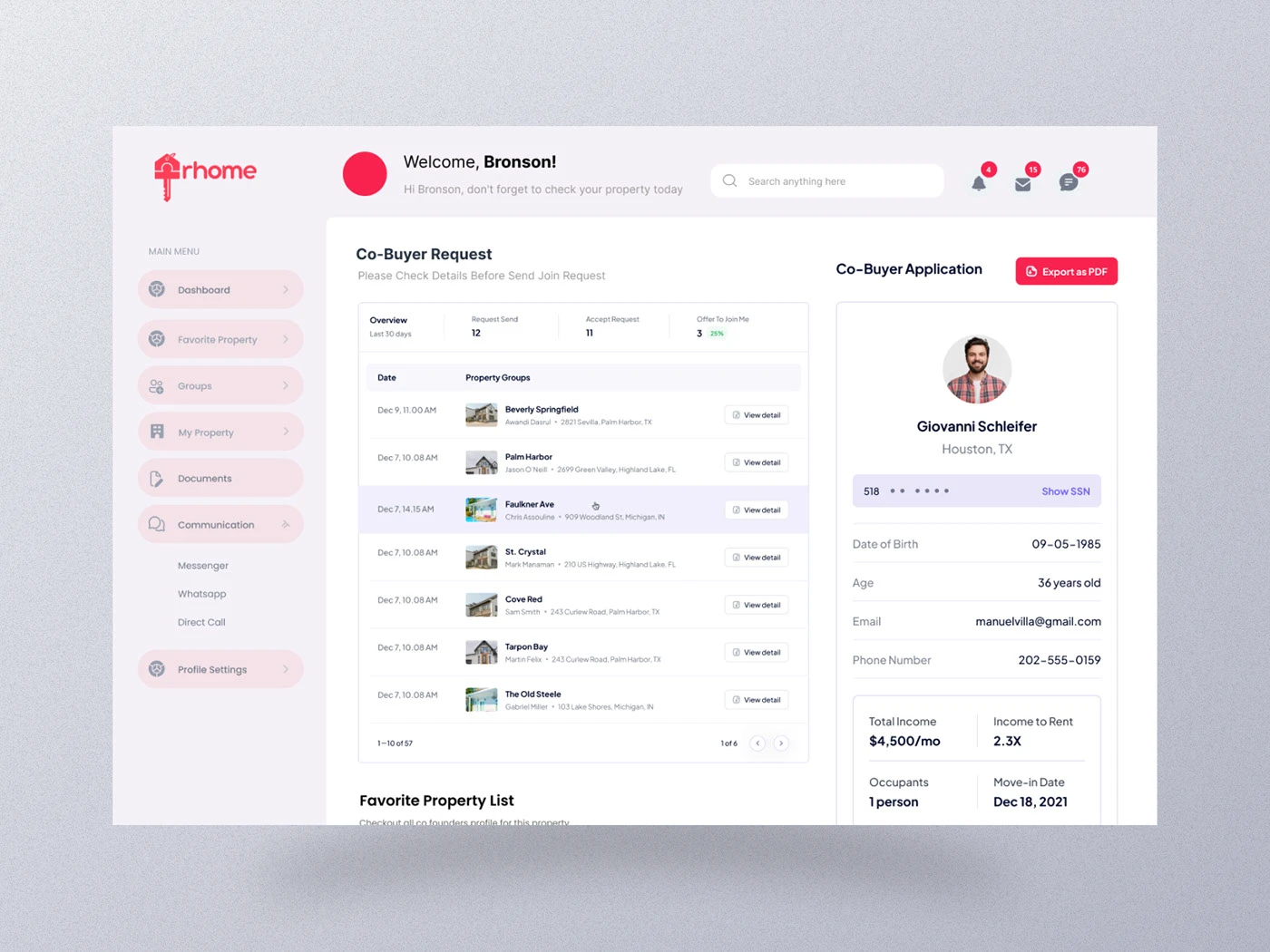
Contacts / ClientsCRM-style contact management
Agent ManagementTeam overview with performance stats
Reports & AnalyticsVisual performance reports
SettingsAccount, team, and notification preferences


Results & Impact


While quantitative metrics aren’t publicly disclosed for this concept project, the design delivers strong outcomes across key UX measures:


Efficiency — Agents can manage their entire workflow from a single interface, eliminating tool-switching and reducing time-to-action on leads.


Clarity — The dashboard-first approach ensures both agents and managers always have the visibility they need, reducing the reliance on manual reporting.


Scalability — The component-driven design system means new features can be added without visual inconsistency, making this a production-ready foundation for an actual SaaS product.


Market Fit — By targeting the underserved mid-market real estate agency segment with a domain-specific CRM, Rhome fills a genuine gap between generic CRMs and expensive enterprise real estate platforms.

The Outcome

Rhome is a thoughtful, well-scoped SaaS CRM concept that demonstrates a deep understanding of both real estate workflows and modern dashboard UX. The design balances information density with visual clarity, and the systematic approach to components and screens suggests a team that thinks in product terms — not just aesthetics. It stands as a strong portfolio piece and a viable blueprint for a real proptech product.

What We Delivered

Cart (0 items)
Select the fields to be shown. Others will be hidden. Drag and drop to rearrange the order.
  • Image
  • SKU
  • Rating
  • Price
  • Stock
  • Availability
  • Add to cart
  • Description
  • Content
  • Weight
  • Dimensions
  • Additional information
Click outside to hide the comparison bar
Compare